
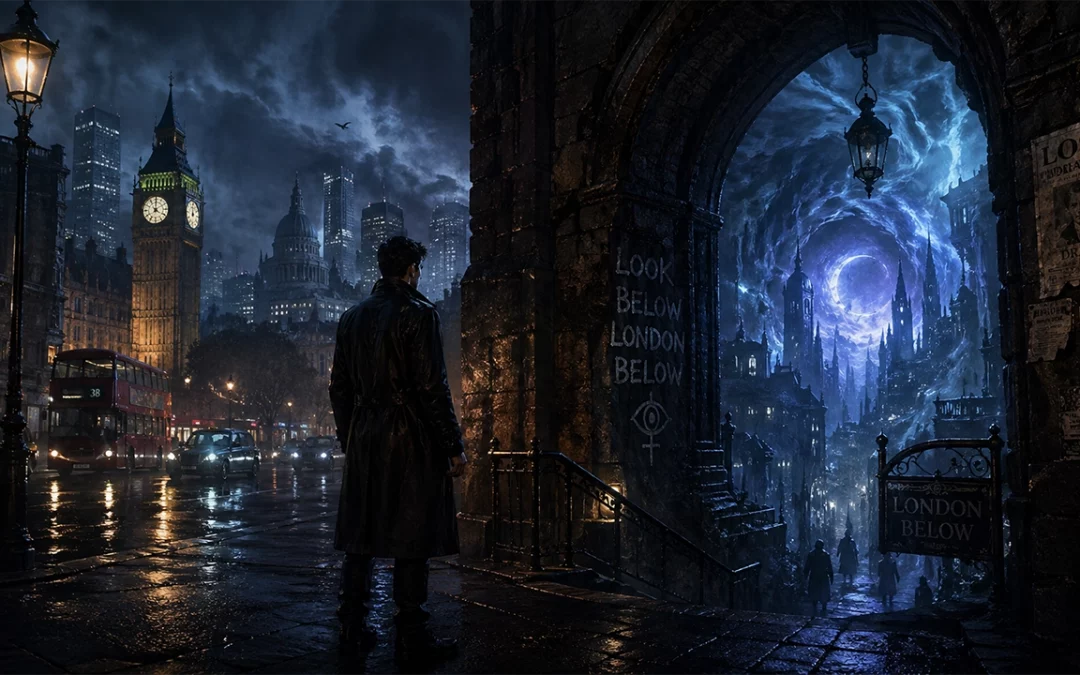
Urban fantasy has a familiar feel for a reason. Beneath the surface, many stories rely on a shared set of narrative patterns—recurring ideas that help readers quickly understand how the world works. These urban fantasy tropes are not shortcuts or clichés by default. They are building blocks. What matters is how they are used, expanded, or challenged.
This guide breaks down eight of the most common urban fantasy tropes, with examples from well-known books and a closer look at what makes each one effective.
Top Urban Fantasy Tropes
The Hidden World Beneath the Ordinary
At the core of urban fantasy is the idea that magic exists alongside everyday life, but remains unseen by most people.
This hidden layer can take many forms:
- A literal underground city
- Secret societies operating in plain sight
- Parallel realities accessible only to a few
The key signal is a shift in perception. Ordinary places become charged with new meaning once the protagonist gains access to this concealed world.
A classic example appears in Neverwhere by Neil Gaiman, where London Below exists beneath the familiar city, populated by those who have slipped through the cracks of society. A more recent example is Dark London, an afterlife version of the city in the novel, Dark Stations.
The trope works because it reframes the city itself, turning geography into narrative.
The risk lies in treating the hidden world as decorative. When it mirrors the real world too closely without adding tension or consequence, the story loses depth. Stronger stories ask what is being hidden—and why.
The Reluctant or Unlikely Hero
Urban fantasy often begins with an ordinary person encountering the extraordinary.
This protagonist typically:
- Starts with limited knowledge
- Resists the new reality
- Gradually adapts to it
Readers experience the world through this learning curve. It creates accessibility, especially in complex settings.
In Neverwhere, Richard Mayhew is not prepared for the dangers of London Below. His confusion mirrors the reader’s, making the transition into the hidden world more immersive. In Dark Stations, Matt is a grieving father who sees the ghost of his daughter in the Underground and follows her into a world he’s not prepared to face.
This trope can weaken a story when the character remains passive. A more compelling version gives the protagonist a personal stake that pushes them to act, not just react.
Supernatural Creatures in Modern Society
Urban fantasy reimagines traditional mythological beings within contemporary settings.
These fantastical creatures are not isolated from society. They are embedded within it:
- Vampires running businesses
- Gods adapting to modern belief systems
- Spirits tied to specific locations
In American Gods by Neil Gaiman, ancient deities survive by aligning themselves with modern forms of worship, such as media and technology. Their power depends on relevance.
The trope gains strength when these beings reflect real-world dynamics—cultural shifts, migration, or changing systems of belief. Without that layer, they risk becoming aesthetic rather than meaningful.
Magical Rules, Contracts, and Systems
Magic in urban fantasy often follows structure. It has limits, costs, and consequences.
This structure may include:
- Formal laws governing magical practice
- Contracts or bargains with binding terms
- Institutions that regulate supernatural activity
In Storm Front by Jim Butcher, magic operates within a defined system, and breaking its laws carries severe penalties. This creates tension and raises stakes.
The effectiveness of this urban fantasy trope depends on consistency. When rules shift without explanation, the world feels unstable. When rules collide with real-world systems—law enforcement, politics, science—the story becomes more layered.
The City as a Character
Urban fantasy relies heavily on setting, and in many cases, the city itself becomes an active force in the narrative.
This goes beyond description:
- Geography shapes events
- History influences power structures
- Locations carry symbolic weight
In Rivers of London by Ben Aaronovitch, London is not just a backdrop. Its rivers, districts, and architecture are tied to magical entities and conflicts.
This trope is most effective when the story cannot be separated from its setting. A generic city weakens the impact. A specific, deeply embedded environment strengthens it.
The Supernatural Mystery
Many urban fantasy stories borrow from crime fiction, blending investigation with the supernatural.
Common elements include:
- A central mystery or crime
- Clues that require both logic and magical understanding
- A structured progression toward resolution
This trope appears frequently in series like Rivers of London and Storm Front, where protagonists investigate cases that bridge the mundane and the magical.
The challenge lies in avoiding formula. When the mystery becomes predictable, the supernatural elements lose their impact. Stronger stories tie the mystery to deeper themes within the world.
Moral Grey Zones
Urban fantasy often avoids clear distinctions between good and evil.
Instead, it presents:
- Conflicting motivations
- Imperfect institutions
- Characters navigating uncertain ethical ground
In The Sandman by Neil Gaiman, characters operate within complex moral frameworks, where actions carry consequences that are not easily categorised.
This ambiguity allows for more nuanced storytelling. It also reflects the complexity of real-world systems, where decisions rarely fit into simple binaries.
The Chosen One
Although more associated with epic fantasy, the chosen one still appears in urban settings.
This urban fantasy trope involves:
- A character with unique abilities or destiny
- A role that connects them to both worlds
- Expectations they may struggle to fulfil
The Harry Potter series by J.K. Rowling provides a well-known example, where the protagonist’s role is defined by forces beyond his control.
In urban fantasy, this trope often benefits from reinterpretation. The idea of being “chosen” can be reframed as a burden, a misunderstanding, or even a manipulation by larger forces.
Why Urban Fantasy Tropes Still Matter
These urban fantasy tropes persist because they provide structure. They help readers navigate complex worlds quickly. They also create expectations that writers can either meet or challenge.
The more interesting question is not whether a story uses these tropes. Most do. What matters is how they are adapted:
- Does the hidden world reveal something about the visible one?
- Does the protagonist shape the story, or simply move through it?
- Do supernatural elements reflect deeper tensions in society?
Urban fantasy sits at the intersection of the real and the imagined. Its tropes act as bridges between those two spaces. When used thoughtfully, they do more than support the story. They give it meaning.
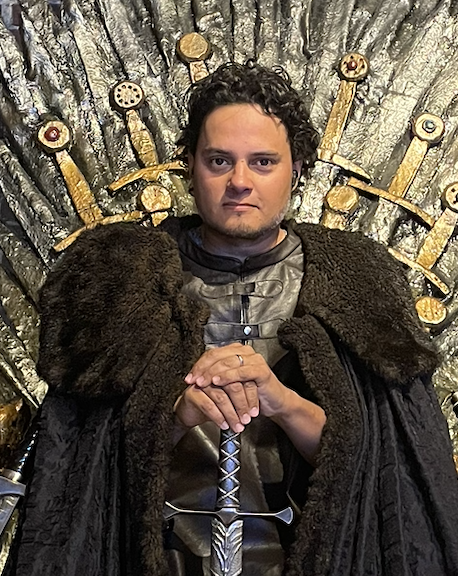
D.P. Martinez is a contemporary fantasy author specialising in urban fantasy and magical realism. He holds an M.A. in English Literature from the University of Greenwich, where he focused on Literary London. His research explored metaphorical representations of London in urban fantasy. He has written hundreds of articles and several books across both fiction and non-fiction.