

When people search for the best fantasy authors, they usually land on epic fantasy—Tolkien, Martin, Sanderson. But there’s another branch of the genre that has quietly transformed how fantasy interacts with the modern world: urban fantasy.
This is where magic lives in cities. Where mythology is embedded in infrastructure, institutions, and everyday life.
And if you want to understand the genre properly, you don’t start with tropes—you start with the authors who shaped it.
Below are five of the top urban fantasy authors, each representing a different way the genre evolved—and where it’s heading next.
Neil Gaiman — The Precursor of Modern Urban Fantasy
Born in England in 1960, Neil Gaiman began his career in journalism before moving into comics, where The Sandman became one of the most influential graphic novels ever written. From there, he moved into prose fiction, blending myth, folklore, and modern settings in ways that helped define contemporary fantasy.
With Neverwhere (1996), Gaiman effectively laid the blueprint for modern urban fantasy: a hidden city beneath the visible one, populated by forgotten people, mythic figures, and symbolic spaces.
His style is deceptively simple—clear prose, mythic structure, and an ability to make the impossible feel quietly inevitable. Rather than building rigid systems, he leans into storytelling logic, where meaning matters more than rules.
In terms of recognition, Gaiman is one of the most decorated fantasy authors alive:
- Multiple Hugo, Nebula, and World Fantasy Awards
- Major wins for The Sandman and The Ocean at the End of the Lane
- Named to the TIME 100 list of influential people
At the same time, it’s important to acknowledge that Gaiman’s public reputation has faced recent controversy. Some readers separate the work from the author; others don’t. Either way, his structural influence on urban fantasy remains foundational.
Jim Butcher — The Author Who Lives Inside the Genre
Jim Butcher, an American author born in 1971, didn’t invent urban fantasy—but he arguably defined its most recognisable form.
His series The Dresden Files (launched in 2000) follows Harry Dresden, a wizard working as a private investigator in Chicago. What began as a noir-inspired concept evolved into one of the longest-running and most commercially successful urban fantasy series.
Butcher’s style is built on:
- Clear, rule-based magic systems
- Detective-style narrative structure
- Escalating stakes across a long series
His influence is so strong that the series has been described as the “gold standard” of urban fantasy . It helped solidify the genre’s identity as something more than myth—it became procedural, structured, and scalable.
Unlike Gaiman, Butcher doesn’t blur the genre—he operates entirely inside it. He shows what urban fantasy looks like when it’s treated as a long-term narrative system rather than a one-off concept.
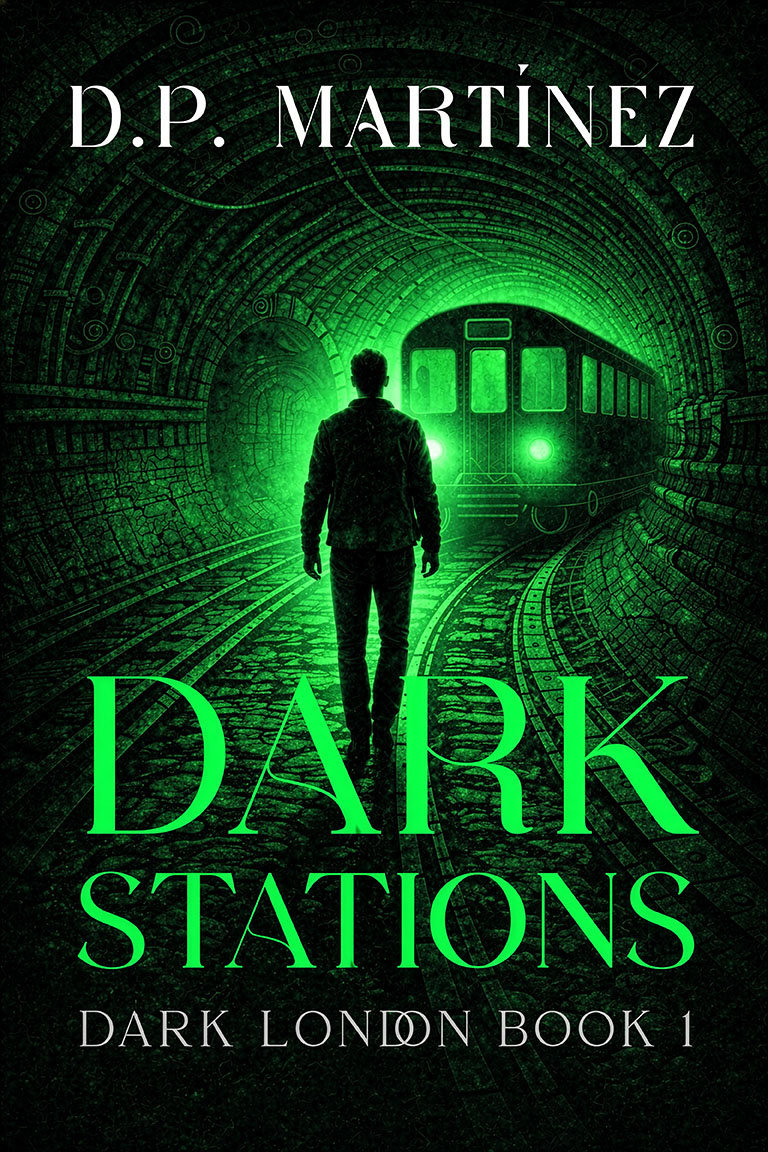
Dark Stations: An Urban Fantasy Novel
Ghosts ride the London Underground, boarding at stations that don’t exist. One day, a man steps off with them to search for his dead daughter.
Ben Aaronovitch — The Author Who Builds Within the Genre
Ben Aaronovitch, a British writer and former Doctor Who screenwriter, represents the modern evolution of urban fantasy in the UK.
His Rivers of London series (2011– ) blends police procedural with folklore, following a Metropolitan Police officer who discovers magic and joins a secret branch of the force.
What sets Aaronovitch apart is his attention to systems and realism:
- Magic is studied, documented, and tested
- The city’s geography directly influences the story
- Bureaucracy and institutions play a central role
Critics and readers often highlight how the series grounds its supernatural elements in a quasi-scientific approach, mixing spells with police jargon .
His work reflects a shift in urban fantasy:
- From myth → to infrastructure
- From mystery → to integration
If Gaiman imagines the hidden city, Aaronovitch explains how it functions.
China Miéville — The Author Who Stretches the Genre
China Miéville, born in London in 1972, is one of the most critically acclaimed and intellectually ambitious writers in modern fantasy.
Often associated with the “New Weird” movement, Miéville’s work resists easy categorisation. His novels—including Un lun dun, King Rat and The City & The City—use urban settings not just as backdrops, but as philosophical constructs.
His style is:
- Dense and literary
- Politically engaged
- Concept-driven rather than character-driven
Miéville’s influence comes not from commercial dominance, but from critical weight. He has won:
- A record three Arthur C. Clarke Awards
- Multiple British Fantasy, Locus, and Hugo nominations
The City & The City in particular redefines urban fantasy: two cities occupy the same space, and citizens are trained to ignore one another. The concept turns geography into ideology.
Miéville doesn’t reinforce the genre—he destabilises it. He shows that urban fantasy can be strange, political, and intellectually demanding.
N. K. Jemisin — The Author Who Redefines the Genre from the Outside
N. K. Jemisin is not primarily an urban fantasy author—and that’s exactly why she matters.
Born in 1972, Jemisin is best known for The Broken Earth Trilogy, becoming the first author to win three consecutive Hugo Awards for Best Novel—one of the most prestigious awards in speculative fiction .
Her entry into urban fantasy, The City We Became, is transformative.
Instead of following genre conventions, she reframes them:
- Cities become living entities with human avatars
- Identity, race, and culture are central to the narrative
- The conflict is existential and symbolic, not romantic
The novel itself:
- Won the BSFA Award for Best Novel
- Was nominated for both the Hugo and Nebula Awards
Jemisin’s style blends literary structure with speculative imagination. She doesn’t just tell stories—she interrogates systems of power.
If Butcher defines urban fantasy and Aaronovitch refines it, Jemisin repositions it entirely.
Other Notable Urban Fantasy Authors to Explore
Beyond these five, the genre includes a wide range of voices shaping its evolution:
- Seanan McGuire — October Daye series (fae politics and long-form storytelling)
- Benedict Jacka — Alex Verus (structured magic and London-based UF)
- Paul Cornell — London Falling (police procedural with occult realism)
- Lauren Beukes — Zoo City (urban fantasy with social commentary)
- Sergei Lukyanenko — Night Watch (moral ambiguity and supernatural politics)
- Luke Arnold — The Last Smile in Sunder City (noir, post-magic world)
YOU MIGHT ALSO LIKE: Top 50 Urban Fantasy Books
Urban Fantasy Is Bigger Than Its Reputation
Urban fantasy isn’t one thing.
It’s not just vampires.
It’s not just romance.
It’s not even just one genre.
It’s a space where:
- Cities become mythological systems
- Power structures take magical form
- The ordinary world reveals hidden layers
The authors above show how wide that space really is.
So when people search for the best fantasy authors, the answer shouldn’t stop at epic fantasy. Some of the most innovative storytelling today is happening in cities—quietly reshaping the genre from the inside.
And if you’ve been avoiding urban fantasy because of its reputation, it might be time to look again.
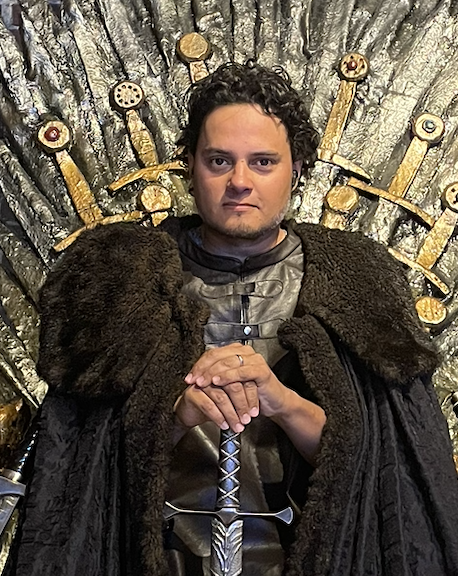
D.P. Martinez is a contemporary fantasy author specialising in urban fantasy and magical realism. He holds an M.A. in English Literature from the University of Greenwich, where he focused on Literary London. His research explored metaphorical representations of London in urban fantasy. He has written hundreds of articles and several books across both fiction and non-fiction.