
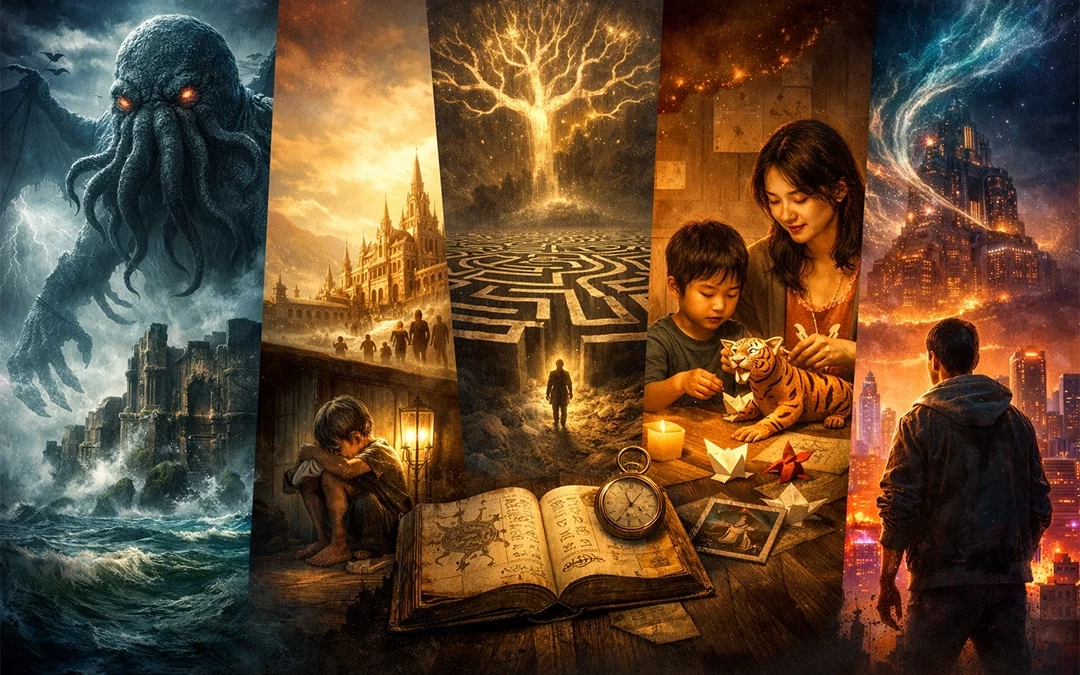
Ask ten fantasy readers to list the “top” short stories in the genre and you’ll get ten different answers.
Some will lean toward mythic classics. Others will choose emotionally devastating modern pieces. A few will argue that fantasy short fiction isn’t about ranking at all, but about experimentation—the laboratory where the genre reinvents itself.
That’s the angle worth taking.
Instead of trying to settle a definitive list, it makes more sense to look at stories that each represent a different function of fantasy. Fantasy is not one thing. Sometimes it creates myth. Sometimes it examines morality. Sometimes it breaks reality open, or makes emotion visible, or reinvents the genre for a new generation.
Here are five stories that do exactly that—and a few others in each category that readers of the genre may want to explore next.
Five Fantasy Short Stories That Reveal What Fantasy Really Does
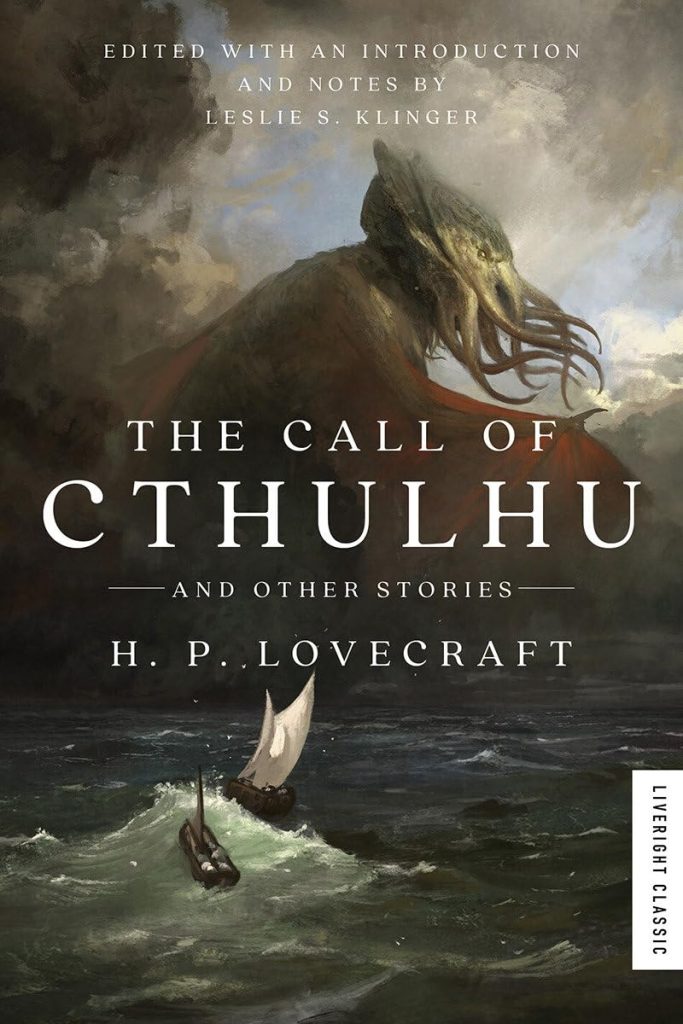
1. Myth-Making: The Call of Cthulhu — H. P. Lovecraft
If fantasy has a myth-building wing, this is one of its core pillars.
The Call of Cthulhu doesn’t just introduce a cosmic entity sleeping beneath the sea; it introduces an approach to storytelling that changed speculative fiction. Lovecraft links newspaper clippings, diaries, cult reports, and scholarly references into a tapestry that feels like recovered history. The famous Necronomicon appears not as a prop but as a piece of hidden lore, suggesting an entire universe beyond the story’s edges.
Readers sometimes focus on the tentacles and horror aesthetics, but the real innovation lies in the structure: fragmented evidence implying a much bigger world. Contemporary fantasy—especially lore-heavy epic and urban fantasy—borrows this constantly. Shared universes, layered mythologies, and recurring references all owe something to this technique.
Other stories in the myth-making tradition include Lord Dunsany’s The Sword of Welleran, which reads like rediscovered legend, and Clark Ashton Smith’s weird tales, which helped shape cosmic fantasy alongside Lovecraft. Even later works like Neil Gaiman’s A Study in Emerald show how mythology can be remixed rather than invented from scratch.
The core function here is simple: fantasy makes us feel that the world is larger, older, and stranger than we knew.
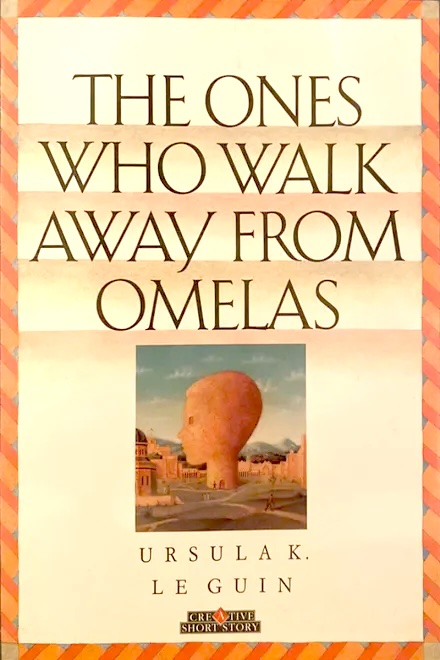
2. Moral Inquiry: The Ones Who Walk Away from Omelas — Ursula K. Le Guin
Few short stories provoke as much discussion among readers as this one.
Le Guin presents a radiant utopian city whose happiness depends entirely on the suffering of a single child. The story never tells you what to think. Instead, it places the reader inside a philosophical dilemma and quietly steps away.
This is fantasy functioning as an ethical mirror. The setting barely matters beyond the moral question it enables. The magic is conceptual rather than literal, creating distance so we can interrogate uncomfortable truths about real societies.
Fantasy readers often associate the genre with escapism, yet stories like Omelas reveal the opposite: fantasy can strip away distractions and force confrontation with moral ambiguity. That influence is visible across later works, especially grimdark and morally complex fantasy where characters navigate impossible choices.
Other stories operating in this moral space include Ted Chiang’s Hell Is the Absence of God, which examines faith and suffering through a speculative lens, and N. K. Jemisin’s shorter fiction, where power structures and ethical dilemmas frequently take centre stage.
The question fantasy asks here is not “What if magic existed?” but “What kind of world would we accept?”
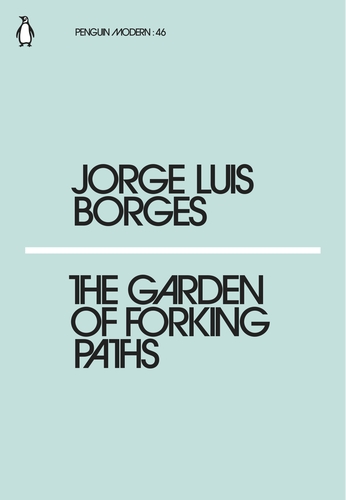
3. Conceptual Exploration: The Garden of Forking Paths — Jorge Luis Borges
If Le Guin turns fantasy into ethics, Borges turns it into philosophy.
The Garden of Forking Paths imagines time as an infinite branching labyrinth. Every possible outcome exists simultaneously, creating a story that feels both intellectual and dreamlike. Borges collapses reality, storytelling, and metaphysics into a compact narrative that reshaped how writers think about speculative fiction.
This is fantasy operating as a thought experiment. The pleasure comes less from plot and more from the conceptual spark—the unsettling feeling that reality itself might be structured differently than we assume.
Modern readers will recognise echoes everywhere: multiverse narratives, nested realities, metafictional storytelling. Borges proved that fantasy could be intensely cerebral without losing wonder.
Other stories in this category include Italo Calvino’s fabulist experiments and Kelly Link’s Magic for Beginners, which plays with narrative logic in ways that feel both surreal and grounded. Even some of China Miéville’s shorter work borrows this willingness to treat ideas as narrative engines.
This function reminds us that fantasy is also a way of thinking.
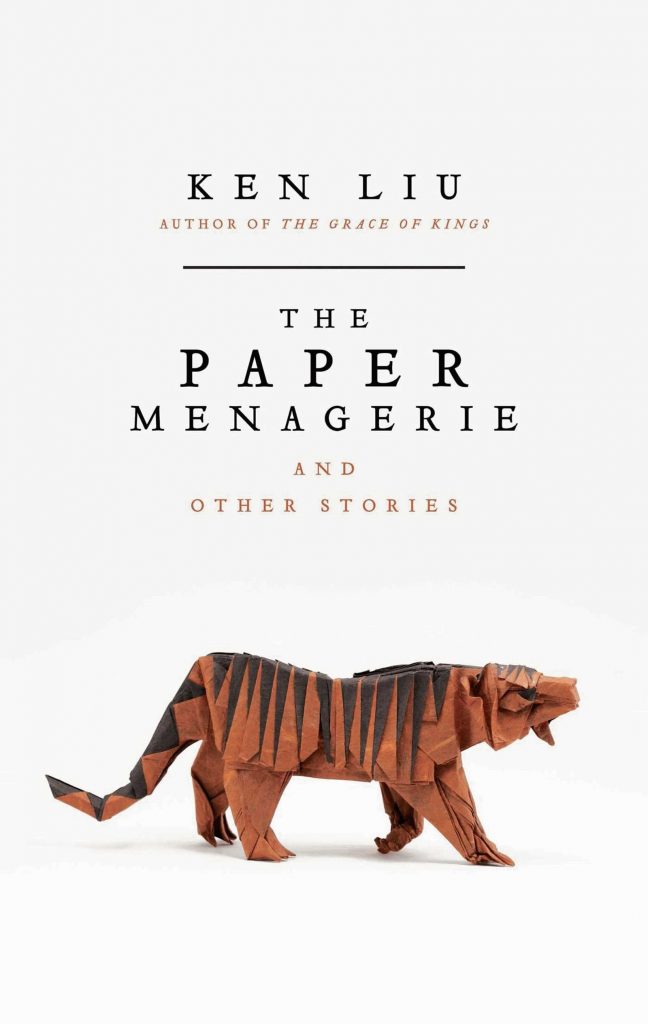
4. Emotional Transformation: The Paper Menagerie — Ken Liu
Fantasy often gets associated with spectacle—massive worlds, complex systems, epic stakes. The Paper Menagerie goes in the opposite direction.
The story follows a child whose origami animals, folded by his mother, come to life. The fantasy element is quiet, almost gentle, but devastating in its emotional impact. The real focus is identity, immigration, language, and memory. Magic exists to make feeling tangible.
This is one of the reasons the story resonated so widely: readers recognise themselves within it. The fantastical device amplifies emotional truth rather than replacing it. That approach has become increasingly common in contemporary fantasy, where intimacy and personal experience often matter more than world-spanning conflict.
Other stories in this emotional tradition include Peter S. Beagle’s Two Hearts, which carries the melancholic tone of fairy tales, and many works by Catherynne M. Valente, where lyrical prose and emotional resonance take priority over conventional plot.
Fantasy here asks a quieter question: what emotions become visible when reality bends just slightly?
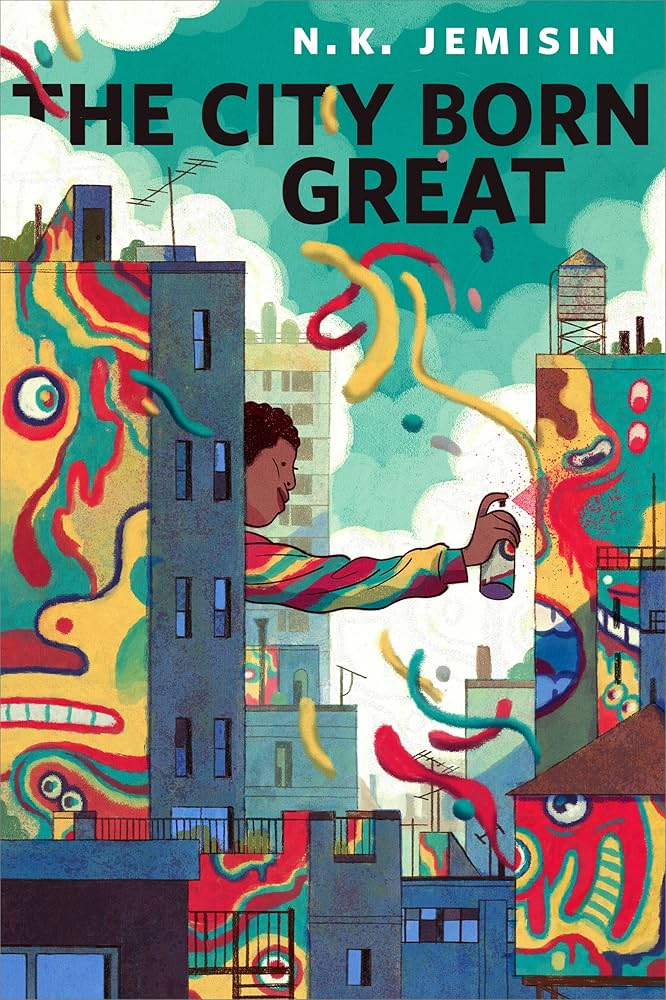
5. Reinvention and the Modern City: The City Born Great — N. K. Jemisin
Fantasy evolves when it stops looking backward.
In The City Born Great, cities themselves become living entities, brought into being through human avatars. The story reimagines urban space as mythic terrain, blending contemporary culture with fantastical transformation.
This represents a major shift in the genre. Instead of castles and medieval landscapes, magic emerges from modern geography. Streets, neighbourhoods, and cultural identity become sources of power.
Readers of urban fantasy will recognise this move immediately. Stories like Neil Gaiman’s Neverwhere, Ben Aaronovitch’s London narratives, and even Miéville’s strange cityscapes all explore the idea that cities contain hidden layers of reality.
Other modern short fiction exploring this reinvention includes Sofia Samatar’s lyrical fantasies and works by Charlie Jane Anders that merge contemporary anxieties with speculative imagination.
The function here is renewal. Fantasy adapts to the world we live in rather than escaping it.
Why These Five Matter Together
What becomes clear when you place these stories side by side is that fantasy isn’t a single tradition but a conversation between different creative impulses.
- Myth-making expands reality.
- Moral inquiry questions society.
- Conceptual exploration challenges perception.
- Emotional transformation deepens human experience.
- Reinvention keeps the genre alive and contemporary.
Most great fantasy stories don’t sit entirely within one category. They overlap, borrowing tools from multiple functions. That’s partly why readers disagree so much about what belongs in a “top” list.
The better question might be: what do you want fantasy to do?
Some readers crave myth and scale. Others seek ethical complexity or emotional intimacy. Some want ideas that bend the mind. The short story form allows all of these to coexist, often with more precision than a novel can manage.
So perhaps the real value of a list like this isn’t deciding which stories are objectively the best. It’s recognising that fantasy has many faces — and that the genre’s richness comes from the tension between them.
If anything, these five stories form a map. Not a definitive ranking, but a guide to the ways fantasy keeps reinventing itself, one short story at a time.

D.P. Martinez is a contemporary fantasy author specialising in urban fantasy and magical realism. He holds an M.A. in English Literature from the University of Greenwich, where he focused on Literary London. His research explored metaphorical representations of London in urban fantasy. He has written hundreds of articles and several books across both fiction and non-fiction.