

If you’ve ever searched for the longest fantasy series, you’ve probably noticed something odd. Most lists quietly mix together two very different things:
- long-running story worlds
- and genuinely long stories.
For readers, that difference matters. A lot.
Some series are huge because the author kept returning to the same setting. Others are huge because one single narrative keeps unfolding across thousands of pages.
This guide separates both, so you can choose what kind of commitment you actually want.
The Longest Fantasy Series by Sheer Size
They share worlds, history and recurring characters, but they are mostly designed so you don’t need to read everything in order.
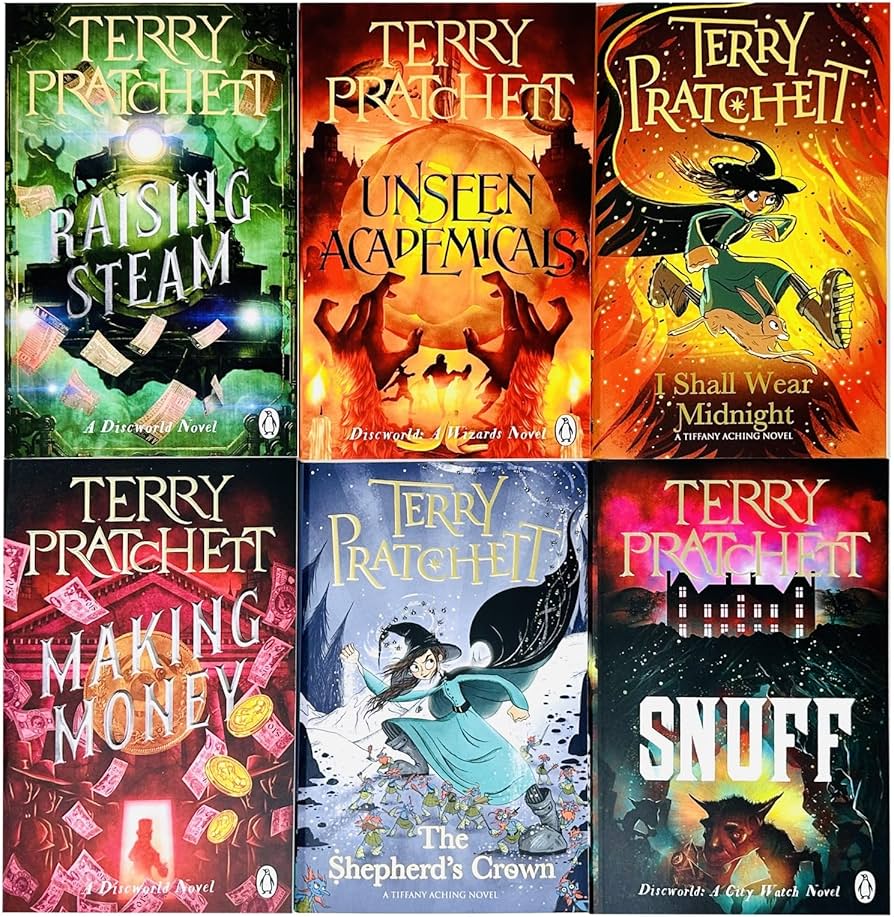
Discworld – Terry Pratchett
Books: 41 novels
What it’s about: A satirical fantasy world centred around the city of Ankh-Morpork, witches in the countryside, reluctant heroes and one very philosophical personification of Death.
Why readers love it: You can start almost anywhere. Each sub-series (City Watch, Witches, Death, etc.) has its own tone and cast.
Discworld is long because it is modular. It is not one continuous story, but a shared social and political world that evolves over time.
The Legend of Drizzt – R. A. Salvatore
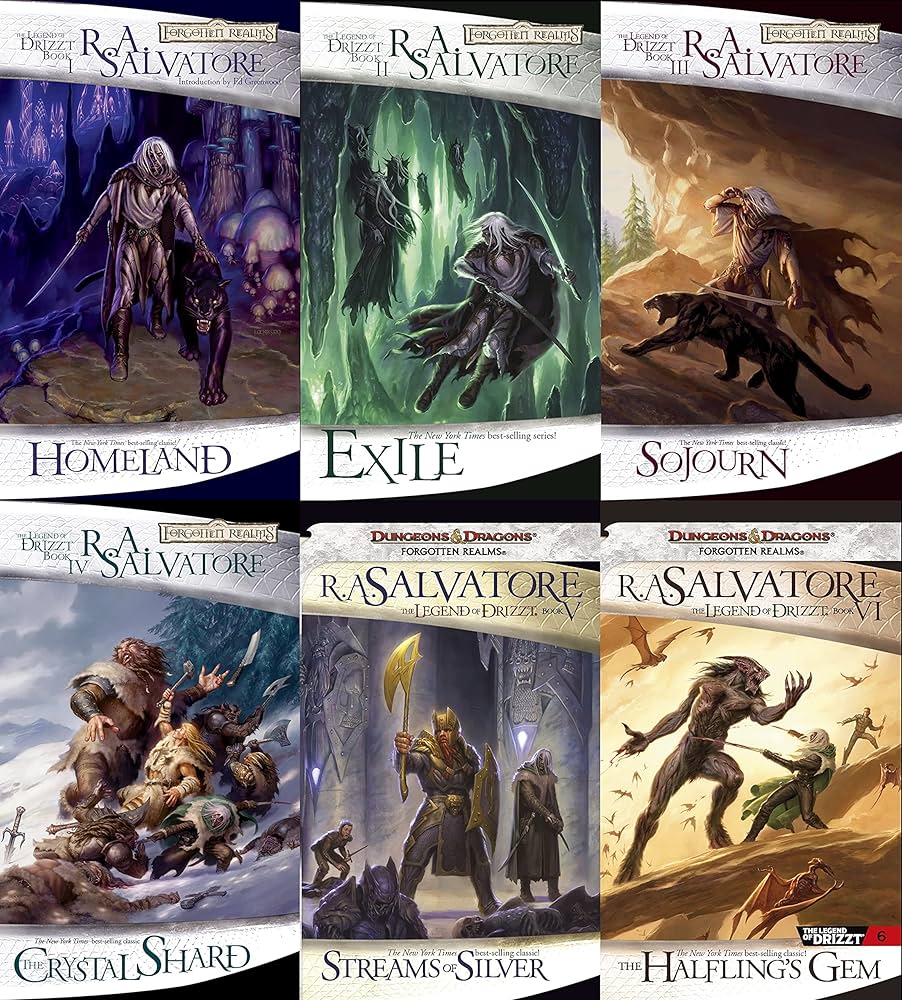
Books: about 39 main novels
What it’s about: The life of Drizzt Do’Urden, a dark elf who rejects his brutal underground culture and becomes a heroic outsider in the Forgotten Realms.
Why readers love it: Character-driven sword-and-sorcery with a strong emotional core and decades of continuity.
This is a long-running hero franchise. The story grows, but it is designed to stay accessible and commercially flexible.
Xanth – Piers Anthony
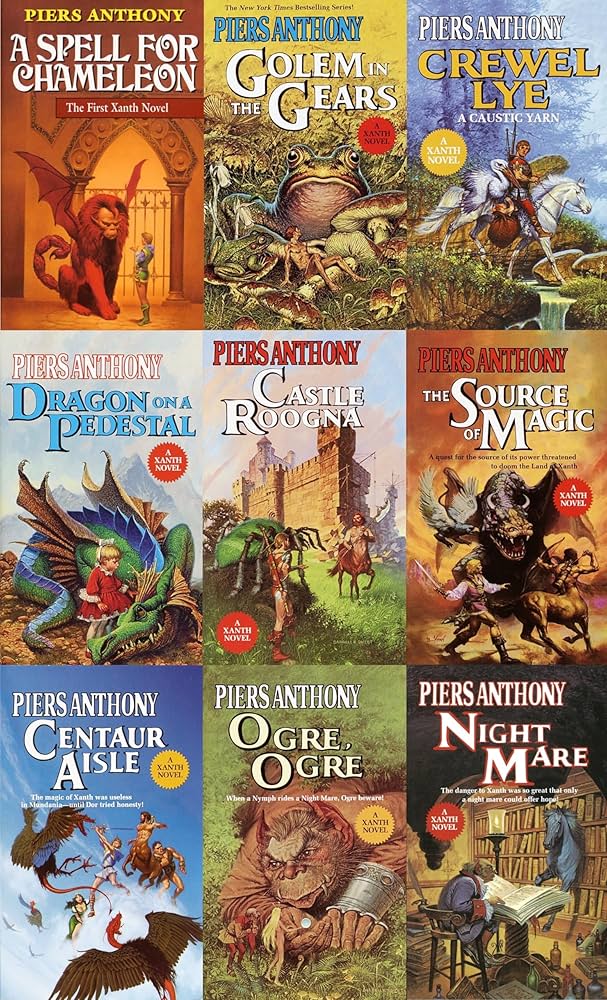
Books: about 46 novels
What it’s about: A light-hearted fantasy land where everyone has a magical talent and the stories revolve around puns, wordplay and comic adventures.
Why readers love it: It is playful, quick to read and extremely prolific.
Xanth is one of the longest fantasy series ever written, but it is intentionally episodic rather than narratively ambitious.
The Riftwar Cycle – Raymond E. Feist
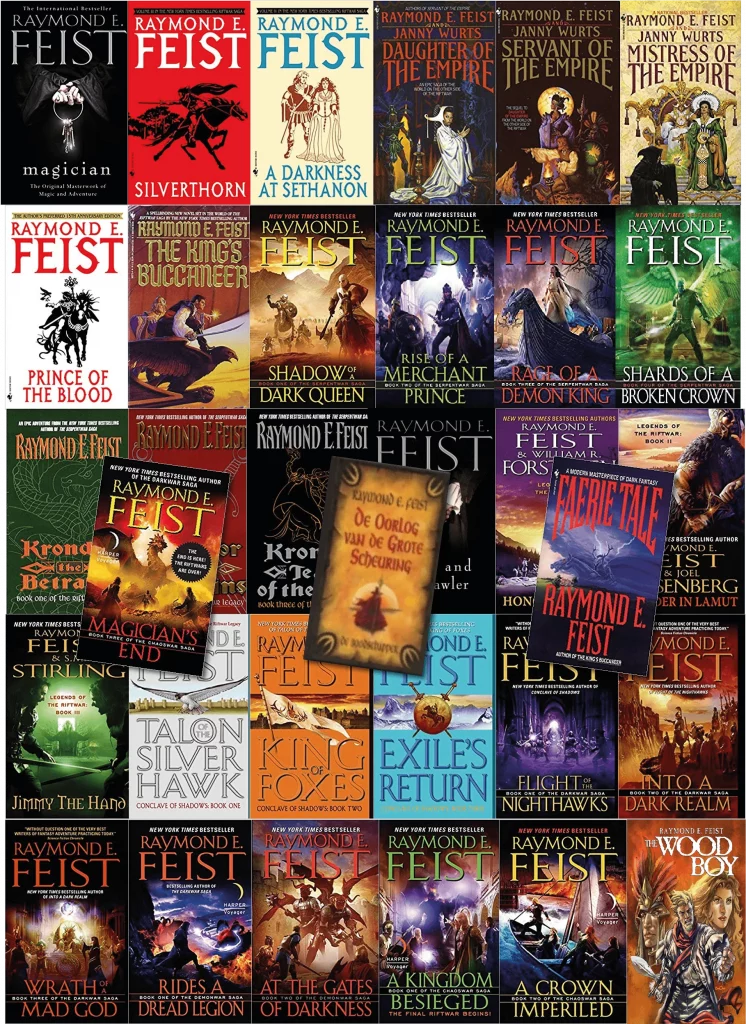
Books: about 30 interconnected novels
What it’s about: A multi-world epic following wars, dynasties and political power struggles between the worlds of Midkemia and Kelewan.
Why readers love it: Clear story arcs, strong classic fantasy structure and a huge historical scope.
It is a federation of sagas. You read story blocks, not one uninterrupted narrative.
The Longest Fantasy Series that Behave Like One Evolving Story
Character arcs, political decisions and metaphysical rules accumulate. If you skip books, you genuinely lose the story.
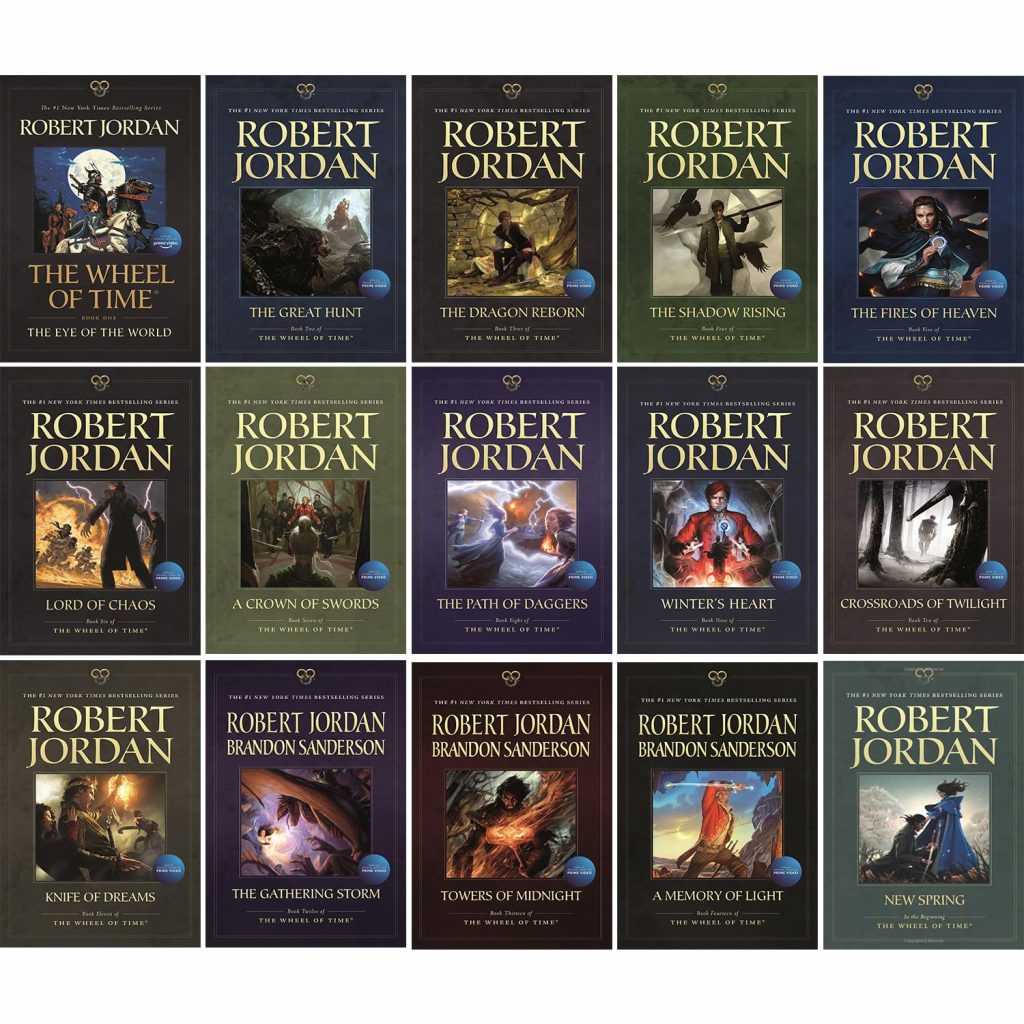
The Wheel of Time – Robert Jordan
Books: 14 main novels (plus 1 prequel)
What it’s about: A young man is drawn into a recurring cosmic conflict while nations, magic systems and political powers reorganise around a small core group whose choices reshape the world.
Why readers love it: Immense scale, deep cultures and one of the most influential long-form epic arcs in modern fantasy.
The middle stretch slows dramatically. World growth sometimes overtakes narrative momentum.
The Wars of Light and Shadow – Janny Wurtz
Books: 11 novels
What it’s about: Two half-brothers become locked into a long, tragic struggle driven by prophecy, political manipulation and radically different interpretations of truth and leadership.
Why readers love it: Dense, emotionally complex fantasy that rewards attention and re-reading, with an unusually strong ethical and philosophical core.
Not beginner-friendly. The style is demanding and the pacing is slow by mainstream epic fantasy standards.
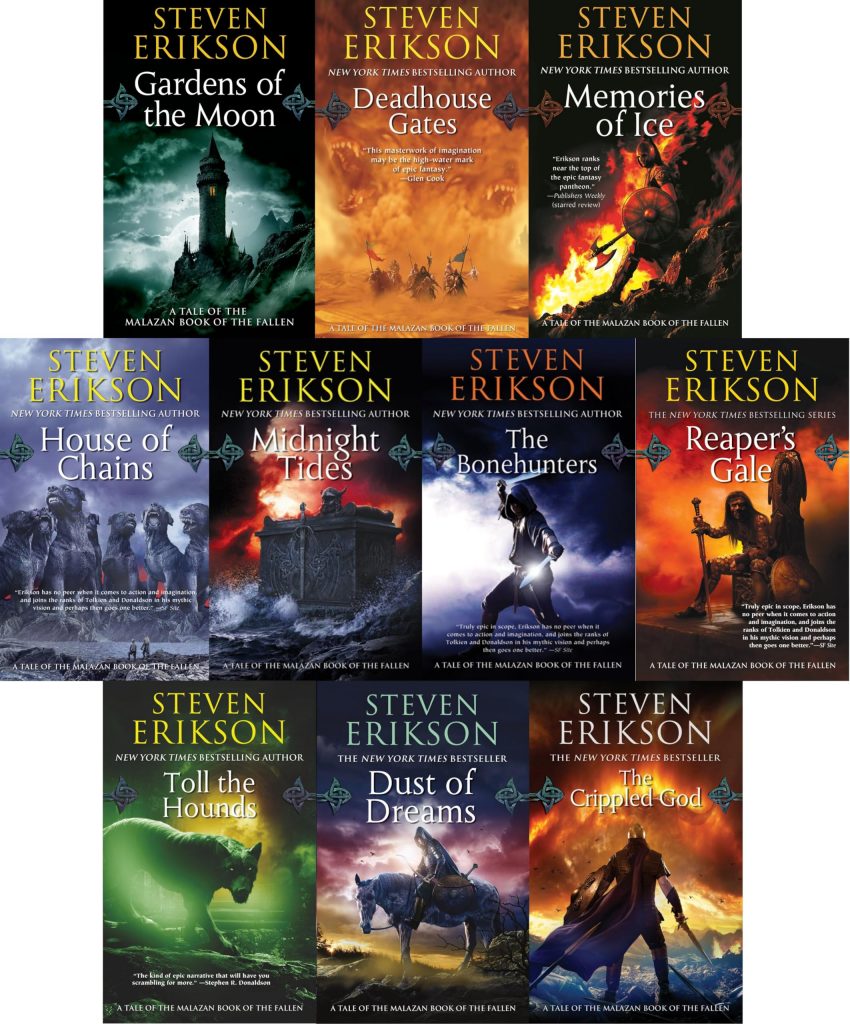
Malazan Book of the Fallen – Steven Erikson
Books: 10 novels
What it’s about: A multi-continental saga in which empires, gods and ancient races collide, unfolding as a single historical process shaped by war, memory and political consequence.
Why readers love it: Huge scope, layered world history and an unmatched sense of cultural and civilisational depth.
Extremely complex. The cast is vast, the narrative jumps between locations and timelines, and there is little hand-holding.
The Wandering Inn – Pirateaba
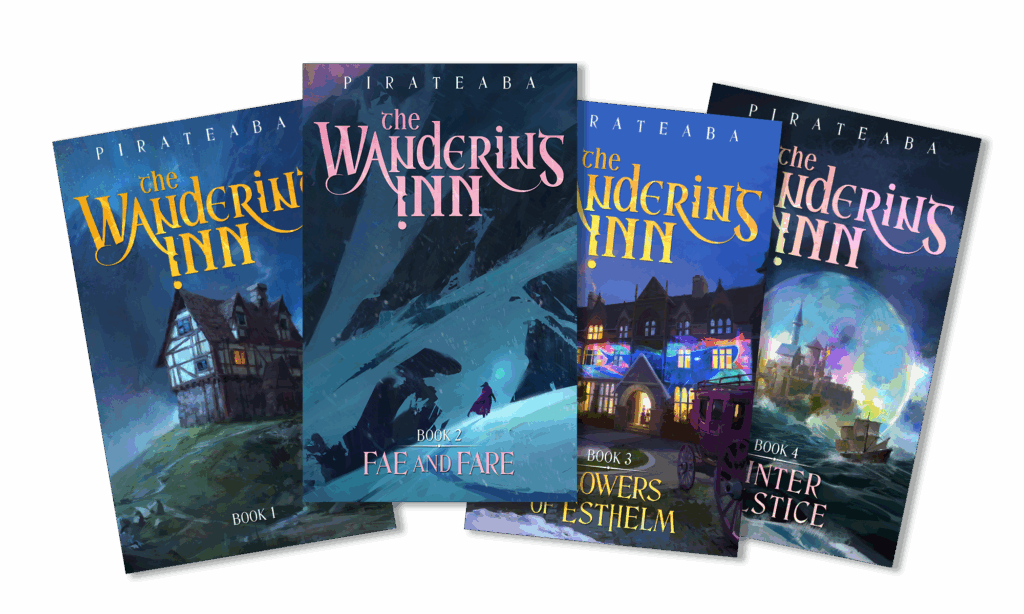
Books: 9 major narrative volumes completed (ongoing web serial; ebook and audiobook editions split these into many smaller releases)
What it’s about: A young woman from Earth opens an inn near the city of Liscor in a dangerous fantasy world. What begins as a small, character-driven survival story expands into global politics, wars, and long-buried historical conflicts.
Why readers love it: Extraordinary character depth, slow-burn emotional arcs and a living, socially complex world that grows outward from one small place.
The length is extreme and the pacing can be uneven due to its serial format. It feels more like living inside a story world than reading a tightly structured novel cycle.
Which Kind of “Long” Fantasy Should you Read?
Here is the simple distinction most lists ignore. If you want maximum freedom to dip in and out,
choose long shared worlds such as Discworld, Drizzt or Riftwar.
If you want deep immersion and narrative accumulation, choose series like Malazan, The Wars of Light and Shadow, The Wheel of Time or The Stormlight Archive.
The second path is more demanding. It also delivers something most franchises quietly avoid: genuine long-term character change and historical consequence.
There is a reason so few authors attempt this.
- Deep narrative dependency reduces discoverability.
- It limits casual entry.
- It raises the risk for publishers and readers alike.
But for committed fantasy readers, especially those who enjoy complex worlds, political change, cultural memory and slow emotional pay-offs, these are the series where long-form storytelling becomes more than scale. It becomes craft.
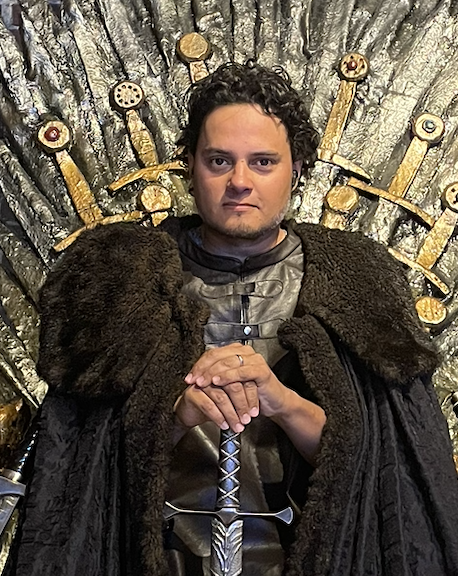
D.P. Martinez is a contemporary fantasy author specialising in urban fantasy and magical realism. He holds an M.A. in English Literature from the University of Greenwich, where he focused on Literary London. His research explored metaphorical representations of London in urban fantasy. He has written hundreds of articles and several books across both fiction and non-fiction.