
There’s still value in calibrating expectations so the journey feels exciting rather than confusing. Let’s walk through what actually happens when someone starts reading fantasy for the first time, why the early bumps are normal, and how to pick books that match your style rather than pressure you into a “canon.”
Fantasy Is More Than Just Magic and Monsters
At the surface level, fantasy includes elements that don’t (yet) exist in our world—magic, mythical beings, impossible creatures, worlds with their own histories. Academic definitions tend to focus on “the impossible made narratively real,” which covers everything from Tolkien’s Middle-earth to Gaiman’s London Below. Readers quickly notice that fantasy doesn’t lock into one flavor. Some stories lean on political intrigue, others explore spirituality, ethics, power, or human flaws through metaphor rather than realism.
Fantasy also deals with rules. Magic systems are sometimes treated like science—structured, limited, and knowable (Brandon Sanderson’s Mistborn series is a common example). Other writers use magic as mythic weather—mysterious, awe-inducing, and fundamentally opaque (Tolkien, Ursula Le Guin, Neil Gaiman, etc.). Understanding where a book falls on that spectrum helps you interpret it without frustration.
Worlds and Subgenres Will Vary Wildly
One of the first surprises for new readers is how many subgenres fantasy hides under its cloak. The publishing world splits them for marketing reasons, but readers benefit from knowing the rough landscape:
High / Epic Fantasy
Set in fully invented worlds with intricate lore, history, politics, and magic. Think The Lord of the Rings, The Stormlight Archive, The Wheel of Time. Stakes tend to be large-scale—wars, kingdom-level conflicts, ancient threats.
Urban Fantasy
Magic operating within recognizable cities and cultures. Supernatural elements hide in plain sight—vampires in Chicago (The Dresden Files), gods in London (Rivers of London), fairies in Portland. These books feel familiar because the world is already half-known.
Sword & Sorcery
Faster-paced adventures, smaller-scale conflicts, morally ambiguous characters. Robert E. Howard’s Conan stories are the classic example, while modern takes sometimes blur the line with grimdark.
Romantasy
Fantasy with romance as a core driver—pairings, relationship arcs, emotional stakes. The subgenre exploded via BookTok and publishers took note. Sarah J. Maas and Rebecca Yarros sit at the heart of that trend.
Magical Realism / Low Fantasy
Magic exists but feels subtle or symbolic, often as a metaphor. Gabriel García Márquez and Haruki Murakami fall into this territory, although purists debate the boundaries.
This spectrum matters because it lets new readers pick the “temperature” they can handle. Someone who loves thrillers might gravitate toward urban fantasy. Someone who grew up on Game of Thrones could enjoy high fantasy. Someone who reads romance might click instantly with romantasy. There isn’t a single correct entry point, just different doorways.
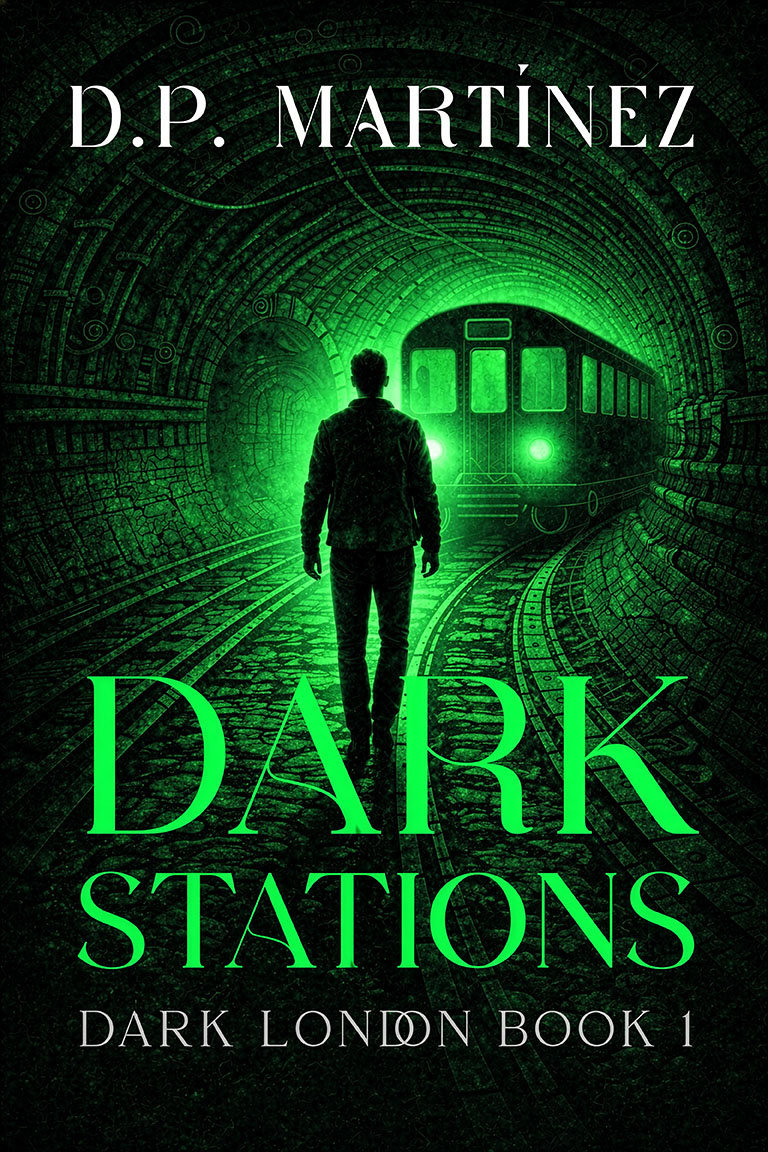
Dark Stations by D.P. Martinez
What it’s about:
Ghosts ride the London Underground, boarding at stations that don’t exist. One day, a man steps off with them to search for his dead daughter.
Why it's a London must-read:
It turns the city’s most iconic system—the Underground—into a living metaphor for grief, memory, and survival. It’s not just set in London; it understands London.
Expect a Learning Curve in the First Few Chapters
A common complaint among new readers is: “I felt lost at the beginning.” That reaction is normal. Fantasy asks readers to decode a world they’ve never lived in. Names, locations, factions, histories, magic systems—none of it maps onto real life. Realism novels offload that cognitive load onto shared cultural knowledge; fantasy builds from scratch.
Several things tend to happen in the first 50–100 pages of many fantasy novels:
- The author drops world-specific terminology without full explanation.
- Characters reference histories or places that don’t exist for the reader.
- Relationships and factions show up before you know why they matter.
New readers sometimes mistake that disorientation for bad writing. In reality, it’s often intentional. Cognitive psychologists studying narrative transportation point out that unfamiliar environments require “schema building”—basically, your brain assembles patterns as you go. The payoff arrives once you cross a threshold where the world’s logic becomes intuitive.
Practical tips that help early on:
- Don’t obsess over pronunciation (the author rarely expects you to).
- Maps and dramatis personae are tools, not tests.
- Audiobooks can flatten the learning curve, especially for tricky names.
- Starting with standalone novels reduces pressure compared to 14-book epics.
Readers used to binge-watching long-form TV adjust faster because they already tolerate slow-burn worldbuilding. Others benefit from starting with fantasy that overlaps with familiar genres (mystery, romance, detective fiction).
Fantasy Sometimes Invents Languages—And That’s Not a Gimmick
Tolkien famously constructed Elvish languages with grammar, phonetics, and etymology. Many thought it was eccentric, but linguists cite Tolkien as a serious language designer, and his approach influenced modern conlang communities. Fantasy languages serve multiple functions:
- They deepen the world’s realism.
- They signal cultural and political differences.
- They create a sense of “otherness” that readers can feel rather than just observe.
In pop culture, we’ve seen the same phenomenon with Dothraki and Valyrian (Game of Thrones), Na’vi (Avatar), and Klingon (Star Trek). No one expects new readers to decode them; they exist to make the world feel lived-in rather than sketched.
Don’t Stress About “Required Reading”
Many new fantasy readers ask: “Do I need to read Tolkien first?” Short answer: no. Tolkien is foundational to the genre’s history, not a mandatory prerequisite. Genre culture occasionally pressures newcomers to read the classics, but reading should never feel like homework.
The better question is: what kind of experience are you seeking?
- Sweeping adventure?
- Political intrigue?
- Romance?
- Mystery or detective energy?
- Philosophical or metaphysical themes?
Fantasy accommodates all of it, which makes the idea of a single “entry book” somewhat outdated. The boom in fantasy publishing over the last decade—driven partly by streaming adaptations, BookTok, and stronger genre marketing—means there’s always a book that meets someone’s taste profile.
Fantasy Books for Beginners: Where to Start (Based on Taste)
Here are entry points grouped by reader temperament rather than reading level:
For Thriller / Mystery Readers:
- The Dresden Files by Jim Butcher
- Rivers of London by Ben Aaronovitch
- The City & the City by China Miéville (borderline speculative crime)
For Romance-First Readers (Romantasy/Light Fantasy):
- Swordheart by T. Kingfisher
- Fourth Wing by Rebecca Yarros
- The Night Circus by Erin Morgenstern (low/no-heat, atmospheric magic)
For Classic Adventure Energy:
- The Hobbit by J.R.R. Tolkien
- The Princess Bride by William Goldman
- Jonathan Strange & Mr Norrell by Susanna Clarke (heavier but rewarding)
For Soft, Lyrical Magic:
- Uprooted by Naomi Novik
- Stardust by Neil Gaiman
- The Ocean at the End of the Lane by Neil Gaiman
For Sci-Fi Leaning Brains:
- Mistborn by Brandon Sanderson (structured magic)
- Foundryside by Robert Jackson Bennett (coding-inspired magic)
- The Fifth Season by N.K. Jemisin (harder themes, high payoff)
Each of these reduces friction for beginners while still showcasing what the genre can do.
Fantasy Is About Discovery, Not Mastery
New readers sometimes want to “understand the genre” before diving in—as if fantasy were a discipline. In reality, it’s closer to travel. You pick a destination, you get lost a little, you learn to navigate, and eventually you find corners of the world that feel like home.
Publication trends suggest the genre will keep evolving. Cross-genre blends are rising, global voices are expanding the canon beyond Eurocentric medieval settings, and streaming platforms keep adapting niche books into mainstream hits. Anyone entering fantasy in 2026 has more choice, more subgenres, and less gatekeeping than readers did even five years ago.
If that sounds exciting rather than overwhelming, you’re already halfway in.
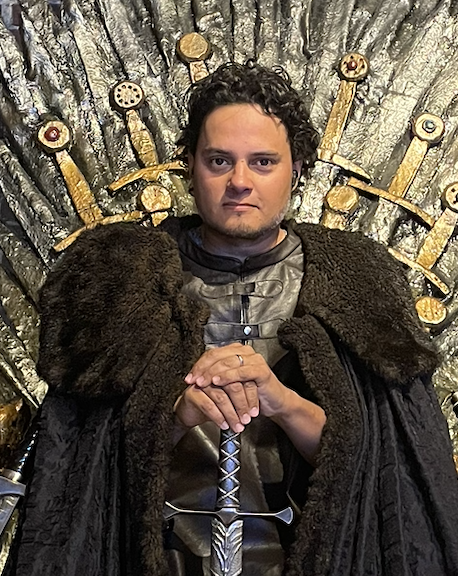
D.P. Martinez is a contemporary fantasy author specialising in urban fantasy and magical realism. He holds an M.A. in English Literature from the University of Greenwich, where he focused on Literary London. His research explored metaphorical representations of London in urban fantasy. He has written hundreds of articles and several books across both fiction and non-fiction.