
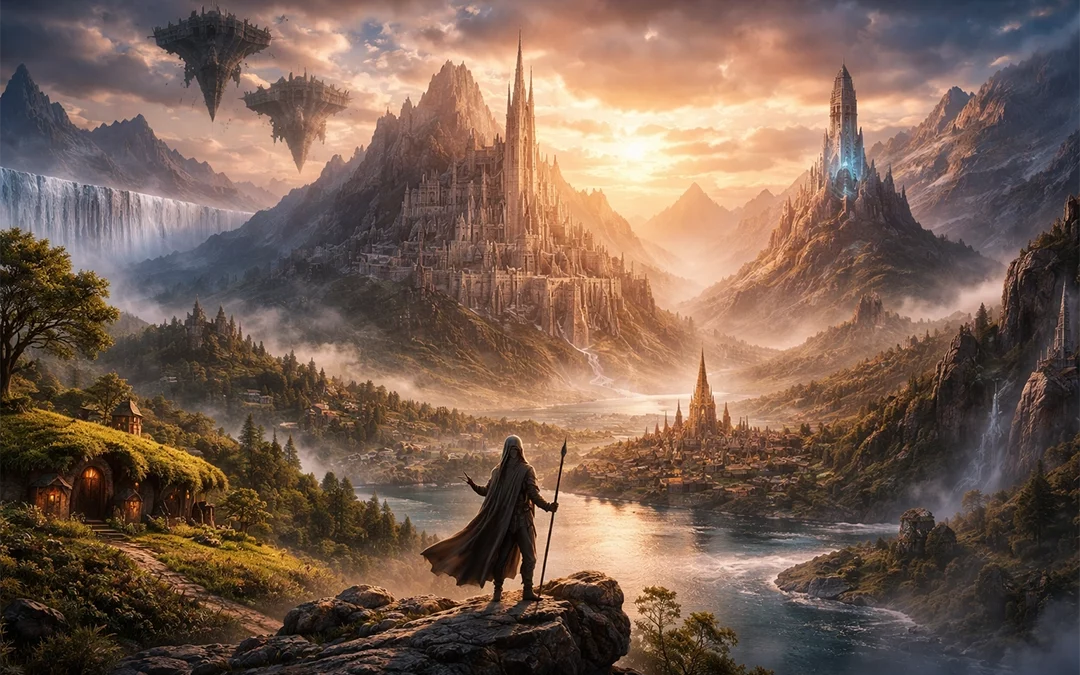
Fantasy readers often talk about characters, magic systems, or plot twists. But the element that truly defines the genre is something deeper: worldbuilding.
The most memorable fantasy stories feel as if they take place in worlds that existed long before the story began—and will continue long after it ends. These are settings with layered histories, cultures, and landscapes that feel real enough to explore.
From the mythic depth of Middle-earth to the surreal industrial landscapes of Bas-Lag, some fantasy series have set the standard for what immersive worldbuilding looks like.
Below are six fantasy series widely admired by readers for creating some of the richest and most detailed worlds in modern fantasy.
What Worldbuilding Means in Fantasy
Worldbuilding refers to the process of creating the social, historical, cultural, and physical framework of a fictional world.
For readers, this includes elements such as:
- Geography and maps
- Political systems and empires
- Languages and cultures
- Mythology and religion
- Magic systems
- Historical events that shape the present
The best fantasy worlds feel internally consistent. The politics make sense. The cultures feel distinct. The history influences current events.
J.R.R. Tolkien famously described the goal as creating a “secondary world”—a place so coherent that readers experience what he called secondary belief.
In practice, that means readers can imagine living there.
What Makes Worldbuilding Truly Exceptional
Not every fantasy series invests in worldbuilding to the same degree. The strongest examples tend to share several traits.
Deep History
The world feels older than the story. Ancient empires, lost civilizations, and forgotten wars shape the present.
Distinct Cultures
Different regions develop unique customs, languages, clothing, and social systems.
Geography That Matters
Mountains, rivers, climate, and trade routes influence politics, economies, and warfare.
Myth and Religion
Legends and belief systems give societies identity and meaning.
Internal Consistency
Magic, politics, and social rules operate according to recognizable patterns rather than random invention.
When these elements work together, the world begins to feel real.
The Best Fantasy Worlds
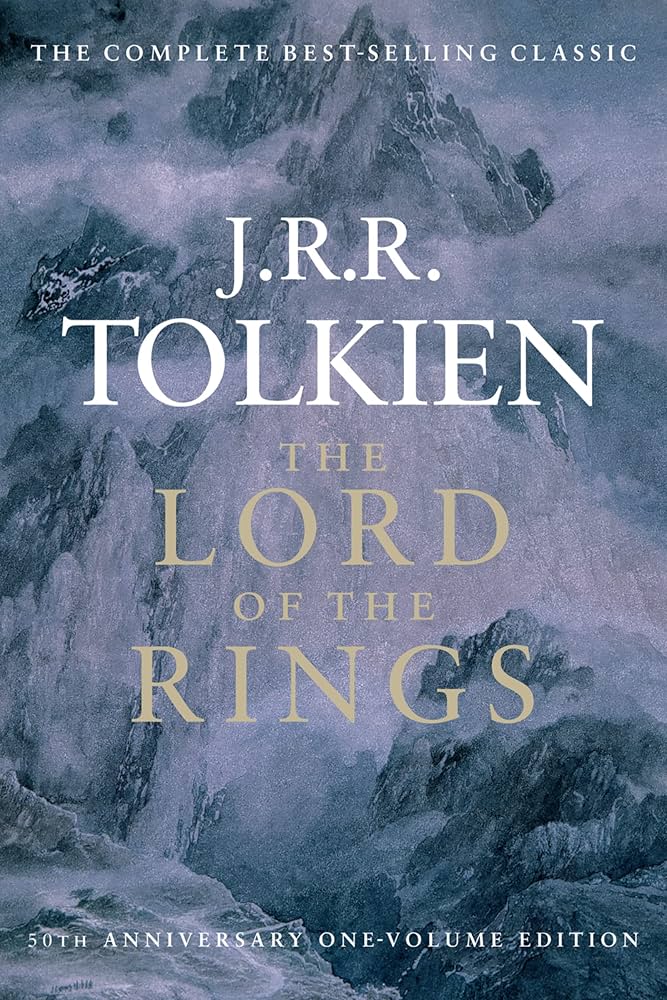
The Lord of the Rings — J.R.R. Tolkien
Few fantasy worlds have shaped the genre as profoundly as Middle-earth.
J.R.R. Tolkien did not simply invent a setting for The Lord of the Rings. He built an entire mythology, including creation stories, ancient epics, languages, and thousands of years of recorded history.
Tolkien was a philologist at Oxford, and language played a central role in his worldbuilding. Languages such as Quenya and Sindarin were developed with full grammatical structures, and entire cultures grew out of them.
The result is a world where geography, culture, and myth intertwine. Elves, Dwarves, Hobbits, and Men each possess distinct histories and traditions. Locations such as the Shire, Rivendell, and Gondor feel culturally unique.
Much of the deeper lore appears in The Silmarillion, which chronicles the mythological history of Middle-earth thousands of years before the events of The Lord of the Rings.
Even decades after publication, Tolkien’s world remains the benchmark against which fantasy worldbuilding is measured.
The Wheel of Time — Robert Jordan
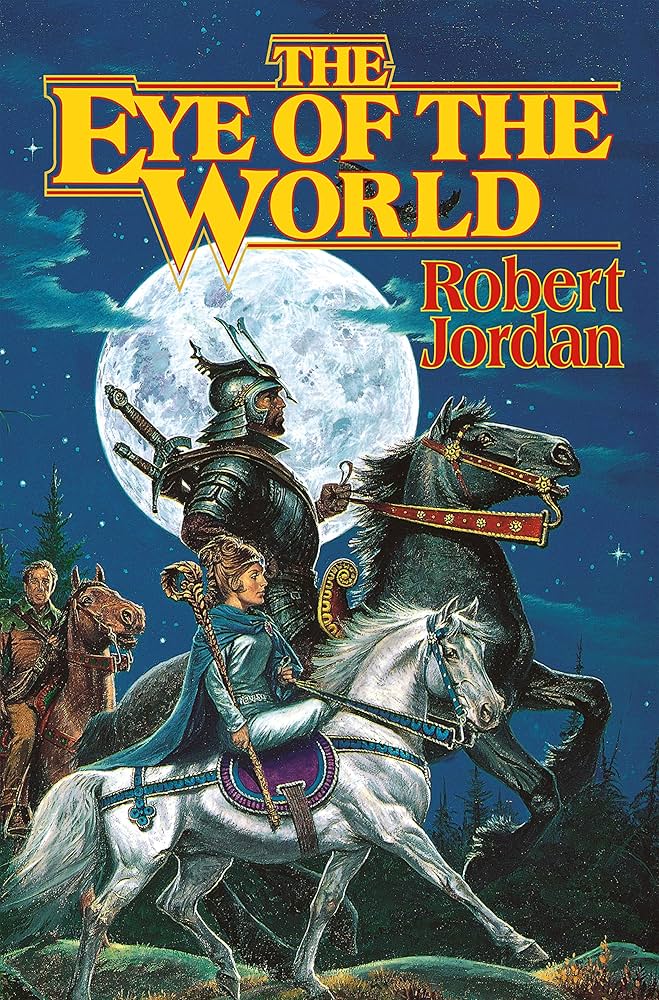
Robert Jordan’s The Wheel of Time stands out for its extraordinary cultural scope.
The series takes place on a vast continent populated by numerous societies, each with distinct traditions, clothing, architecture, and social structures. The Aiel desert warriors, the maritime Seafolk, and the politically powerful Aes Sedai all reflect different cultural influences.
Jordan also developed a complex magical system built around the One Power, divided into male and female halves known as saidin and saidar. This structure shapes both the political and religious dynamics of the world.
Underlying the story is a cyclical cosmology. Time itself repeats through ages as the Wheel turns, and the characters are part of a long pattern of rebirth and prophecy.
With thousands of characters and an immense historical background, the world of The Wheel of Time feels vast and deeply layered.
A Song of Ice and Fire — George R.R. Martin
George R.R. Martin approaches worldbuilding differently.
Instead of focusing on magic or mythology, Martin builds his world through politics, economics, and historical realism.
The continent of Westeros resembles medieval Europe in its feudal structure. Noble houses compete for power, marriages shape alliances, and centuries-old rivalries influence current events.
Each region has its own culture and environment: the harsh northern territories ruled by House Stark, the desert lands of Dorne, and the seafaring Iron Islands.
Beyond Westeros lies Essos, home to ancient cities and the ruins of the once-powerful Valyrian empire.
Martin’s worldbuilding is grounded in historical logic, which helps explain why the political conflicts of the series feel so believable.
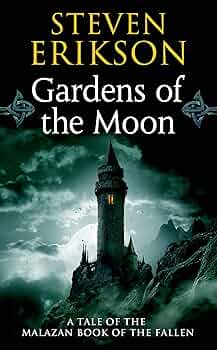
Malazan Book of the Fallen — Steven Erikson
Steven Erikson’s Malazan Book of the Fallen is often described as one of the most complex fantasy worlds ever written.
Erikson, who studied archaeology and anthropology, approaches worldbuilding with an emphasis on deep time and ancient civilizations.
The world contains remnants of cultures stretching back hundreds of thousands of years. Extinct races, forgotten wars, and buried empires shape the present political landscape.
Magic operates through mysterious dimensions known as Warrens, which act as sources of power for mages and gods alike.
The series also introduces a vast pantheon of ascendant beings, ancient creatures, and divine entities whose actions ripple across centuries.
For readers willing to immerse themselves in its complexity, Malazan offers one of the most intricate fantasy settings ever created.
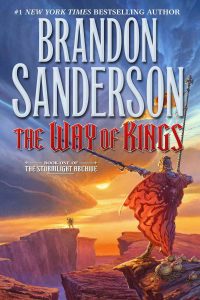
The Stormlight Archive — Brandon Sanderson
Brandon Sanderson’s The Stormlight Archive demonstrates a modern, systematic approach to worldbuilding.
The series takes place on the planet Roshar, where colossal magical storms known as highstorms sweep across the world with devastating force.
These storms influence nearly every aspect of life. Cities are built to withstand them. Animals and plants have evolved protective shells. Warfare and travel depend on the rhythms of the storms.
Sanderson also develops highly structured magical systems involving Shardblades, Surgebinding, and the ancient orders of the Knights Radiant.
Roshar is part of Sanderson’s larger fictional universe known as the Cosmere, where multiple series share an interconnected cosmology.
The combination of ecological design, complex magic systems, and cultural depth makes Roshar one of the most distinctive worlds in contemporary fantasy.
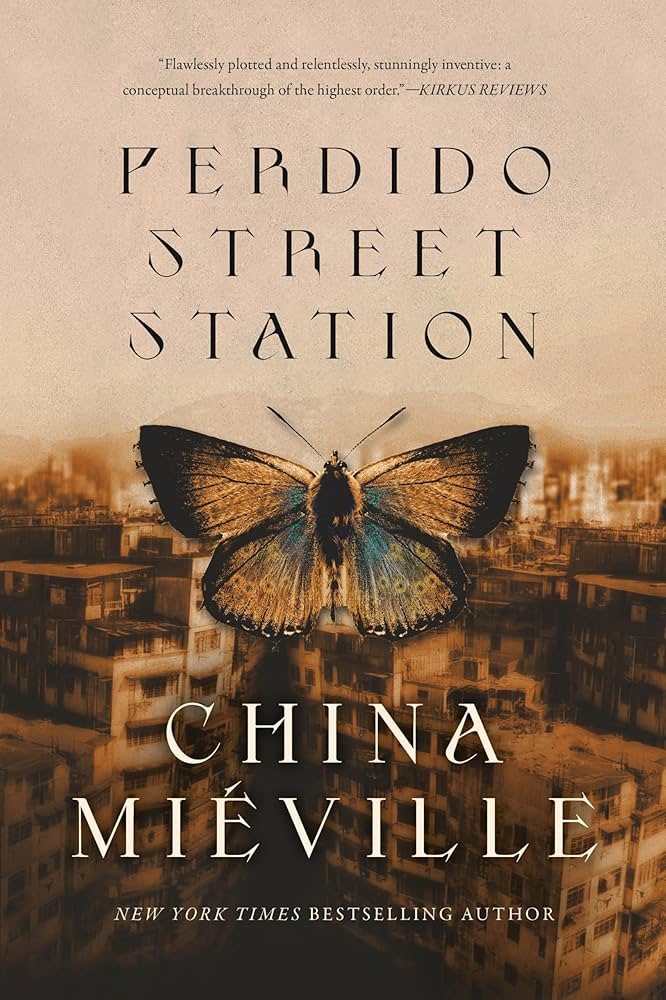
The Bas-Lag Novels — China Miéville
China Miéville’s Bas-Lag setting offers a radically different approach to worldbuilding.
Rather than traditional medieval fantasy, Bas-Lag blends industrial technology, strange biology, and dark political themes.
The city of New Crobuzon, introduced in Perdido Street Station, is a sprawling metropolis filled with unusual species, including the insect-headed Khepri and the cactus-like Cactacae.
The world also contains disturbing social institutions, such as the Remade—criminals whose bodies are grotesquely altered as punishment.
Miéville’s worldbuilding is less concerned with epic history and more focused on atmosphere, social critique, and imaginative strangeness.
The result is a setting that feels alien, unsettling, and unlike almost anything else in fantasy.
Why Readers Love Deep Fantasy Worlds
Great worldbuilding invites readers to explore.
Maps become places you want to travel. Cities feel alive with stories. Ancient ruins hint at mysteries still waiting to be uncovered.
Many readers return to fantasy series not only for the characters but for the chance to revisit worlds that feel real and expansive.
Whether it’s the mythic depth of Middle-earth, the political drama of Westeros, or the strange industrial landscapes of Bas-Lag, these worlds demonstrate how powerful imaginative settings can be.
We can step into another world entirely and believe, for a moment, that it exists.
D.P. Martinez is a contemporary fantasy author specialising in urban fantasy and magical realism. He holds an M.A. in English Literature from the University of Greenwich, where he focused on Literary London. His research explored metaphorical representations of London in urban fantasy. He has written hundreds of articles and several books across both fiction and non-fiction.