
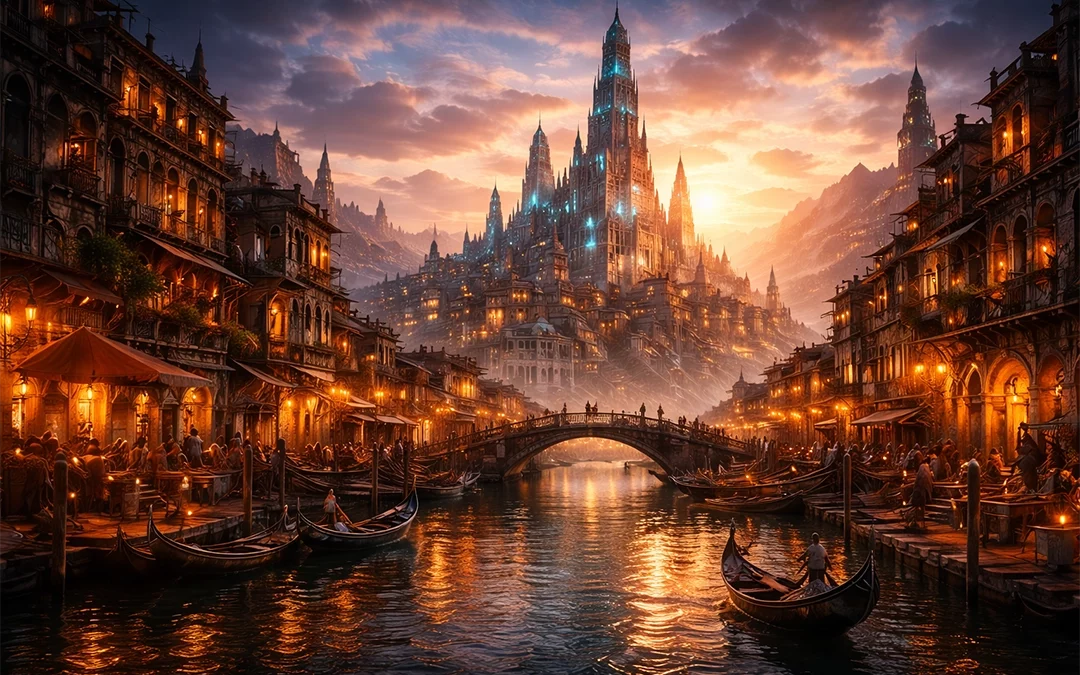
One of the great pleasures of fantasy is stepping into another world. Readers expect strange creatures, ancient magic, and epic adventures. Yet the element that often makes a fantasy setting truly immersive is something more familiar: the city.
The best fantasy cities feel like real places. They have crowded streets, political tensions, class divisions, and neighborhoods shaped by centuries of history. They are places where people live, work, trade, argue, and struggle for power.
Some authors have created cities so vivid that readers remember them almost as clearly as real-world locations. Places like Ankh-Morpork, New Crobuzon, Camorr, and Darujhistan are more than settings. They are complex environments where stories grow naturally out of urban life.
Here are six of the most memorable fantasy cities ever created.
YOU MIGHT LIKE: Fantasy Series With the Most Impressive Worldbuilding
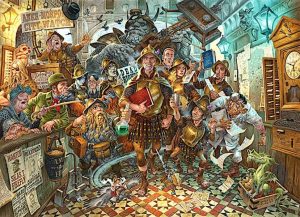
Ankh-Morpork — Discworld by Terry Pratchett
At first glance, Ankh-Morpork looks like a medieval city taken to absurd extremes. The river Ankh is so polluted that characters joke it can almost be walked across. The streets are crowded, noisy, and frequently dangerous.
What makes the city feel real is its surprisingly detailed social structure.
Guilds regulate nearly every profession. There are guilds for assassins, thieves, merchants, and seamstresses. Even crime operates under bureaucratic rules through the Thieves’ Guild.
The city is governed by the Patrician, Lord Vetinari, who rules through manipulation of institutions rather than brute force.
Behind the satire lies something deeper. Ankh-Morpork behaves like a living city whose institutions adapt to population growth, trade, and politics.
New Crobuzon — Perdido Street Station by China Miéville
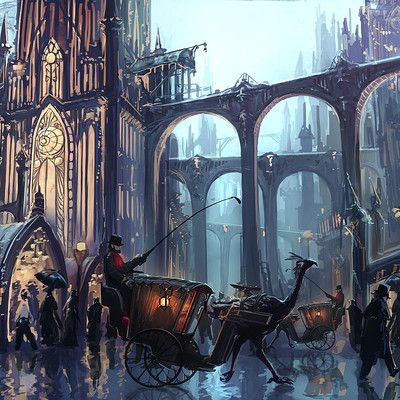
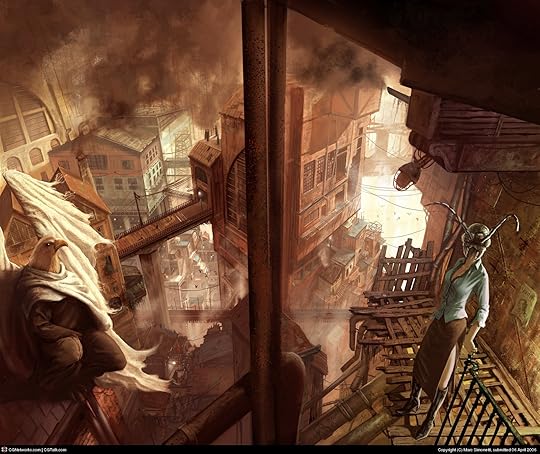
Introduced in Perdido Street Station, the city exists within the Bas-Lag universe and combines elements of industrial revolution cities with grotesque speculative biology.
Factories dominate the skyline. Smoke drifts through narrow streets. Trains run through enormous stations surrounded by towering structures of iron and stone.
The population reflects the strange nature of the world. Humans live alongside species such as the insect-headed Khepri and the cactus-like Cactacae.
One of the most disturbing features of the city is the punishment system known as Remaking, where criminals are surgically altered into monstrous forms.
Despite its surreal elements, the city feels believable because Miéville treats it like a functioning industrial metropolis shaped by political corruption, labor struggles, and social inequality.
Camorr — The Lies of Locke Lamora by Scott Lynch
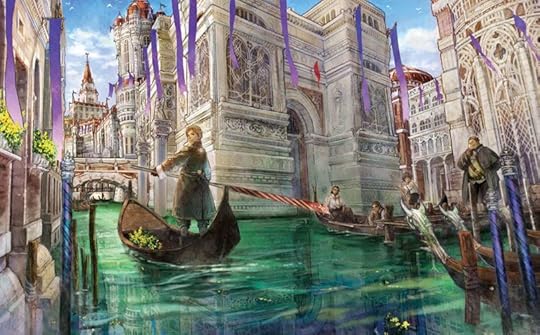
Often compared to Venice, Camorr features canals, bridges, merchant palaces, and labyrinthine alleys. Ancient structures known as Elderglass towers—remnants of a mysterious civilization—rise above the skyline.
The novel follows the Gentleman Bastards, a group of con artists navigating the city’s elaborate criminal networks.
What makes Camorr feel real is the way wealth and crime intersect. Merchant houses dominate trade, nobles compete for prestige, and criminal organizations operate under strict hierarchies.
Each district has its own character and power dynamics. Camorr feels alive because its economy, politics, and criminal underworld constantly collide.
Luthadel — Mistborn: The Final Empire by Brandon Sanderson
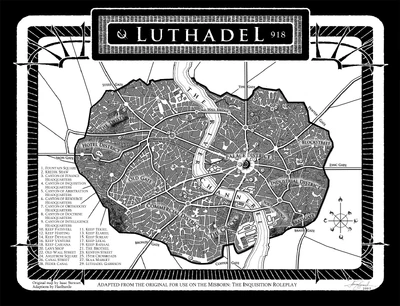
Ash constantly falls from the sky, coating buildings and streets in gray dust. Mists gather every night, creating an atmosphere of secrecy and fear.
Society is sharply divided between the noble houses and the skaa, the enslaved working class who sustain the empire’s economy.
Sanderson integrates the city directly into his magic system. Allomancers manipulate metals to perform extraordinary feats, giving noble houses a powerful advantage.
Luthadel’s bleak atmosphere mirrors the oppressive regime that rules it.
Darujhistan — Malazan Book of the Fallen by Steven Erikson
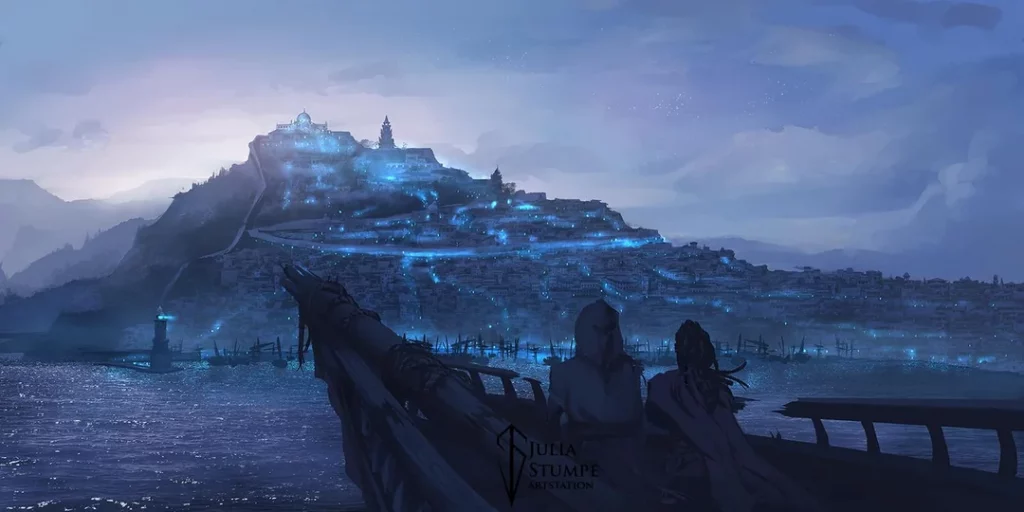
Unlike many fantasy cities built around castles and walls, Darujhistan glows with thousands of magical gas lamps that illuminate the streets at night.
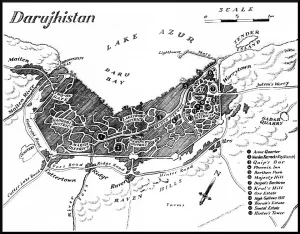
The city is wealthy, cosmopolitan, and politically complex. Merchants, noble families, thieves, assassins, and secret societies all operate within its crowded districts.
Darujhistan stands at the crossroads of trade routes and imperial ambitions, making it a focal point for intrigue and espionage.
Erikson’s background in archaeology and anthropology helps give the city unusual depth. The streets feel ancient, the politics layered, and the citizens fully embedded in the larger history of the Malazan world.
Minas Tirith — The Lord of the Rings by J.R.R. Tolkien
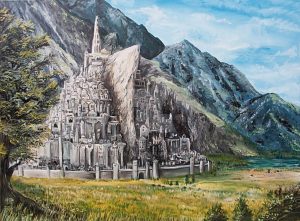
Appearing in The Lord of the Rings, the city serves as the capital of Gondor and the last great stronghold of the West against Mordor.
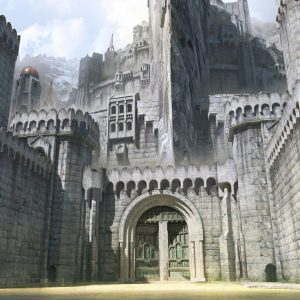
Built into the side of a mountain, Minas Tirith rises through seven concentric levels of defensive walls.
The architecture reflects the long history of Gondor, a kingdom descended from the once-great civilization of Númenor.
Minas Tirith feels real not because of its size, but because it represents the legacy of a fading empire. The city carries the weight of centuries.
Why Fantasy Cities Matter
Cities concentrate the essential elements of worldbuilding.
In a city, readers see how power operates, how wealth circulates, and how different cultures interact. Markets, taverns, guild halls, and alleyways provide natural settings for stories.
The most memorable fantasy cities feel layered with history. Buildings reveal the influence of past rulers. Neighborhoods reflect migration and trade.
That is why places like Ankh-Morpork, New Crobuzon, Camorr, Luthadel, Darujhistan, and Minas Tirith stay in readers’ minds long after the book ends.
They are not simply locations in a story. They are worlds in miniature.

D.P. Martinez is a contemporary fantasy author specialising in urban fantasy and magical realism. He holds an M.A. in English Literature from the University of Greenwich, where he focused on Literary London. His research explored metaphorical representations of London in urban fantasy. He has written hundreds of articles and several books across both fiction and non-fiction.