
Fantasy is often associated with escapism. Many readers turn to it for adventure, immersive worlds, and compelling characters. Yet some fantasy books demand far more. They challenge your attention, your patience, and your ability to interpret complex ideas.
These are not difficult because they are poorly written. They are difficult because they are ambitious. They present vast histories, dense prose, unfamiliar narrative structures, and philosophical depth that rewards careful reading.
If you are looking for fantasy that pushes you intellectually and emotionally, these are eight of the hardest fantasy books ever written.
YOU MAY ALSO LIKE: The Fantasy Series With The Best Prose
The (Hard) List
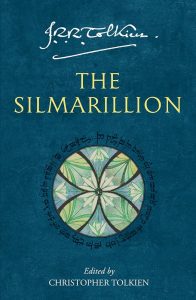
1. The Silmarillion by J.R.R. Tolkien
Few fantasy books intimidate readers as much as The Silmarillion. Unlike The Lord of the Rings, this is not a conventional novel. It reads more like a collection of ancient myths, chronicling the creation of Tolkien’s world and the rise and fall of entire civilizations.
One of the main challenges is the sheer number of characters. Many have similar names, and their stories unfold across different ages. Tolkien does not slow down to remind you who is who. He assumes your attention.
The prose itself adds to the difficulty. It has a formal, almost biblical tone that reinforces the sense that you are reading mythology rather than fiction.
Those who persist discover one of the richest fictional histories ever created. This book forms the foundation of modern fantasy worldbuilding.
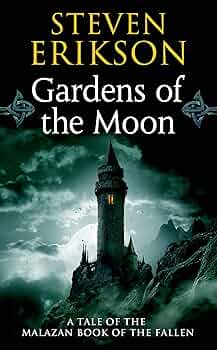
2. Malazan Book of the Fallen by Steven Erikson
Steven Erikson’s Malazan Book of the Fallen, beginning with Gardens of the Moon, is widely considered one of the most complex fantasy series ever written.
The difficulty begins immediately. The story drops you into the middle of ongoing wars, political conflicts, and ancient rivalries. There is very little exposition. New readers often feel disoriented during the opening chapters.
The series spans multiple continents, hundreds of characters, and thousands of years of history. Erikson shifts perspectives frequently, and characters who seem central may disappear for entire books.
This structure forces readers to trust the process. As the story unfolds, connections emerge, and the scope becomes breathtaking. The difficulty is part of the experience.
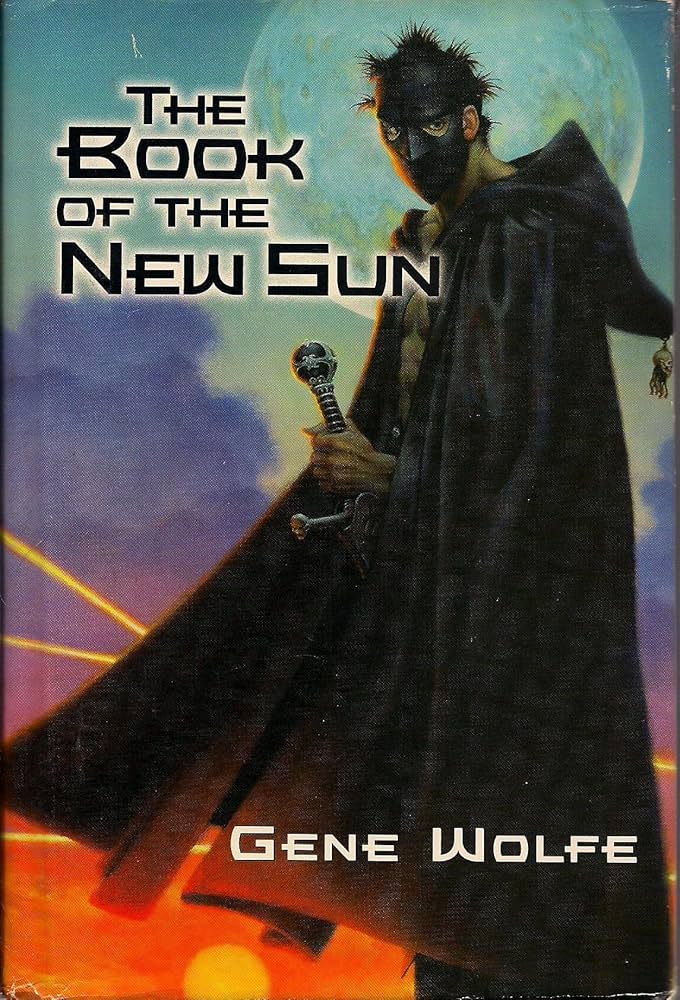
3. Book of the New Sun by Gene Wolfe
Gene Wolfe’s Book of the New Sun, starting with The Shadow of the Torturer, is one of the most intellectually demanding works in fantasy.
The narrator, Severian, presents himself as honest and precise. Yet readers gradually realise he withholds information, misinterprets events, or fails to explain key details. Understanding the true story requires reading between the lines.
Wolfe also uses obscure and archaic vocabulary. Many words describe unfamiliar technologies or concepts without explanation.
This creates a layered narrative where meaning emerges slowly. Readers often discover new interpretations when revisiting the text.
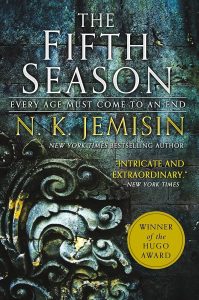
4. The Fifth Season by N.K. Jemisin
N.K. Jemisin’s The Fifth Season, the first book in the Broken Earth trilogy, challenges readers through its unconventional narrative structure.
Large portions of the story are written in second person, addressing the reader as “you.” This technique creates intimacy but also disorientation. The timeline is fragmented, and the relationship between different characters is not immediately clear.
The world itself is complex, shaped by catastrophic geological events and unique forms of magic tied to the planet.
As the narrative progresses, the pieces align in powerful and surprising ways. The difficulty reinforces the emotional and thematic impact.
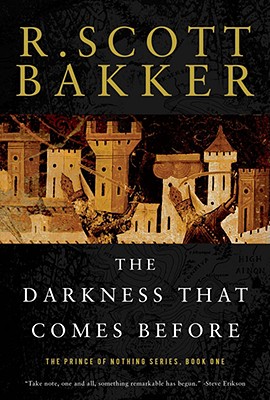
5. The Prince of Nothing by R. Scott Bakker
R. Scott Bakker’s The Prince of Nothing trilogy, beginning with The Darkness That Comes Before, stands apart for its philosophical depth.
This is fantasy concerned with psychology, belief, and manipulation. Characters analyse each other constantly, seeking advantage through perception and understanding.
The ideas explored are dense and often unsettling. Bakker draws on philosophy, neuroscience, and theology to shape his characters and world.
Readers must engage with both the plot and the underlying concepts. This creates a demanding but intellectually rich experience.
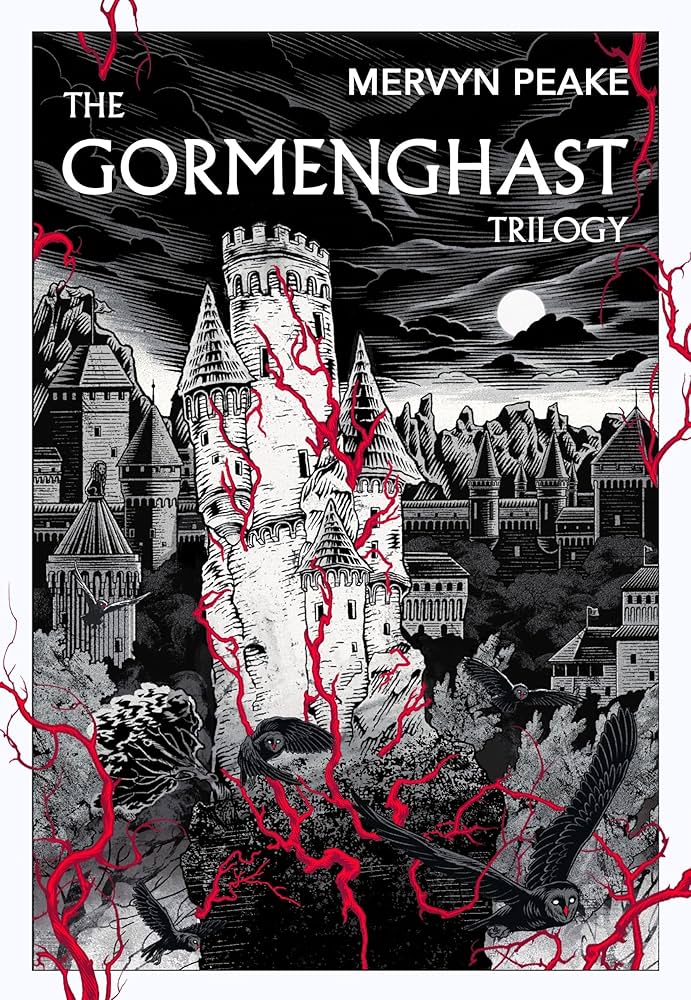
6. Gormenghast by Mervyn Peake
The Gormenghast trilogy, beginning with Titus Groan, is famous for its dense and elaborate prose.
Peake focuses heavily on atmosphere and description. The castle itself feels alive, filled with ritual, decay, and tradition. The pace is slow, and the narrative prioritises psychological depth over action.
This style requires patience. Readers must immerse themselves fully in the world and accept its deliberate rhythm.
Many consider Peake’s prose among the finest in fantasy literature. The difficulty reflects the precision and artistry of his writing.
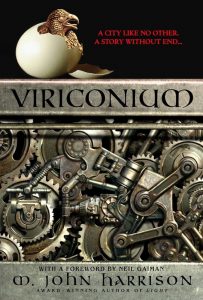
7. Viriconium by M. John Harrison
M. John Harrison’s Viriconium series challenges expectations about how fantasy worlds function.
In most fantasy, the world operates according to clear rules. In Viriconium, those rules shift constantly. The city changes between stories. Events contradict each other. Reality itself feels unstable.
This uncertainty forces readers to question what they know. Harrison focuses less on plot and more on perception, decay, and the passage of time.
The result is a deeply unconventional reading experience.
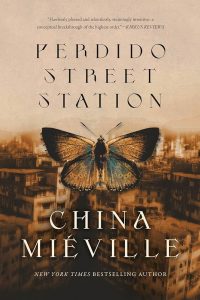
8. Perdido Street Station by China Miéville
China Miéville’s Perdido Street Station introduces readers to the city of New Crobuzon, one of the most vivid and disturbing settings in fantasy.
The city is filled with strange creatures, political tensions, and unfamiliar technologies. Miéville does not simplify his world. He presents it in full complexity from the beginning.
His prose is dense and descriptive. The story explores social, political, and philosophical themes alongside its narrative.
Readers must adjust to the strangeness of the setting. Once they do, the city becomes unforgettable.
Why Read Difficult Fantasy Books?
Difficult fantasy offers something unique. These books do not guide readers gently. They demand attention, interpretation, and engagement.
This creates a deeper connection to the story. Readers participate actively, discovering meaning rather than receiving it passively.
These books also expand the possibilities of contemporary fantasy. They show that the genre can explore philosophy, psychology, history, and identity with the same seriousness as literary fiction.
For readers willing to accept the challenge, the rewards are substantial.

D.P. Martinez is a contemporary fantasy author specialising in urban fantasy and magical realism. He holds an M.A. in English Literature from the University of Greenwich, where he focused on Literary London. His research explored metaphorical representations of London in urban fantasy. He has written hundreds of articles and several books across both fiction and non-fiction.