
The publishing industry lumps these together for convenience, but fantasy scholars and serious fans break it into dozens of micro-scenes.
Let’s map the terrain.
1. High / Epic Fantasy
Secondary-world stories with sweeping stakes, invented cultures, geopolitics, wars, gods, prophecies, and multi-book arcs. Often the form that casual readers equate with “traditional fantasy.”
The Lord of the Rings — J.R.R. Tolkien
A fellowship crosses Middle-earth to destroy a corrupting artifact while armies of darkness rise. Tolkien blends philology, mythology, and war trauma into a single myth-cycle.
Why it’s top-tier: Its influence is absurd. Linguistics, worldbuilding, and heroic archetypes in modern fantasy still orbit Tolkien, even when authors try to escape him.
A Song of Ice and Fire — George R.R. Martin
Seven kingdoms fracture under political intrigue, dynastic struggles, and the return of an ancient threat. Magic is rare, brutal, and often tied to religion or blood.
Why it’s top-tier: Martin dragged epic fantasy toward realism and institutional rot—shifting the genre’s tone in the 1990s and shaping the explosion of “gritty fantasy” later.
The Stormlight Archive — Brandon Sanderson
Knightly orders, magical storms, spren (semi-sentient spirits), ancient wars, and a big ensemble cast. Magic is rule-based, yet still mysterious.
Why it’s top-tier: Sanderson took the epic form and applied engineering logic to magic systems. Even readers who dislike his style admit he defined a new era of “technical epic fantasy.”
2. Low Fantasy / Intrusion Fantasy
The “real world” (or something close to it) disrupted by the magical. Often atmospheric, occasionally satirical or folkloric.
Rivers of London — Ben Aaronovitch
A London police officer discovers ghosts, river spirits, and a quasi-scientific form of magic tied to place and history.
Why it’s top-tier: It helped modernize urban police procedural fantasy without collapsing into noir clichés. Its mix of folklore and bureaucracy is distinctive.
Jonathan Strange & Mr Norrell — Susanna Clarke
Napoleonic England with scholarly magicians, fairies, and footnotes that blend fictional history with actual history.
Why it’s top-tier: Clarke revived Austen-era prose for fantasy, which critics didn’t see coming. It treats magic as a historical discipline rather than a spectacle.
The Magicians — Lev Grossman
A bright but depressed student enters a magical university and finds that escape doesn’t cure ennui.
Why it’s top-tier: The novel interrogates portal fantasy rather than worships it—highly influential for post-2010 fantasy aimed at adults who grew up on Narnia.
3. Urban Fantasy
Urban fantasy is about cities + magic + crime/noir structures. Usually contemporary, sometimes historical, often character-based.
Neverwhere — Neil Gaiman
A banal London hides an under-city full of saints, assassins, and living metaphors.
Why it’s top-tier: Gaiman locked in the “city as spirit world” blueprint that later urban fantasy borrowed heavily from.
The Dresden Files — Jim Butcher
A wizard PI takes cases involving vampires, fae courts, and Chicago syndicates.
Why it’s top-tier: Butcher mainstreamed the serial urban fantasy model—fast plots, character growth, monster-of-the-week done right.
The City We Became — N.K. Jemisin
Cities become sentient avatars and fight a cosmic invader. New York leads the charge.
Why it’s top-tier: Jemisin injects politics, identity, and art theory into urban fantasy. A rare case where the genre talks back to its own tropes.
4. Sword & Sorcery
Lean storytelling, antiheroes, monsters, artifacts, and tight action scenes. Less concerned with world politics and more with personal survival or glory.
Conan the Barbarian — Robert E. Howard
A brooding warrior travels a pseudo-historical world fighting sorcerers and demons.
Why it’s top-tier: It practically shaped the pulp fantasy DNA—episodic, violent, muscular prose.
The First Law — Joe Abercrombie
Assassins, torturers, and mercenaries try to survive wars and magical conspiracies.
Why it’s top-tier: Abercrombie keeps the sword & sorcery spirit but writes with self-awareness and black humour. A bridge between pulp and modern cynicism.
The Black Company — Glen Cook
A mercenary company chronicles its campaigns for tyrants and sorcerers.
Why it’s top-tier: Military structure, moral grayness, and field-level perspective. Steven Erikson cites Cook as a big influence, and you can see why.
5. Grimdark
Fantasy that believes institutions fail, morality is conditional, and power corrupts more often than it ennobles. Critics debate whether it’s nihilistic or realistic.
The First Law — Joe Abercrombie (also fits here)
Warlords, inquisitors, and broken heroes in a world that doesn’t reward virtue.
Why it’s top-tier: Abercrombie became the genre’s touchstone—dark but not joyless, cynical but funny.
The Traitor Baru Cormorant — Seth Dickinson
A young woman infiltrates an imperial bureaucracy to destroy it from within, using accounting, trade policy, and espionage.
Why it’s top-tier: Dickinson proves that spreadsheets and colonial violence can be more brutal than sword fights. Critics loved the sociopolitical angle.
The Poppy War — R.F. Kuang
Military boarding school → war → genocide, with Chinese history as scaffolding.
Why it’s top-tier: Kuang didn’t flinch from atrocity or state violence. The trilogy often appears in discussions of ethical responsibility in fantasy.
6. Mythic & Folkloric Fantasy
Draws from myth cycles, religious motifs, and oral traditions. Often symbolic rather than plot-driven.
The Broken Earth Trilogy — N.K. Jemisin
A dying world, geological magic, racism, parenthood, and mythic history braided together.
Why it’s top-tier: Three consecutive Hugo awards for Best Novel—a first. Jemisin treats myth not as set dressing but as a political force.
The Buried Giant — Kazuo Ishiguro
A post-Arthurian couple attempts to recover memory in a land haunted by mist and forgetting.
Why it’s top-tier: Ishiguro questions mythmaking itself—what societies choose to remember or bury. Fantasy lit courses love this book.
Circe — Madeline Miller
A goddess exiled to an island learns to wield power and autonomy.
Why it’s top-tier: Miller re-centers myth around character psychology rather than fate. Greek myth retellings exploded after this book’s success.
7. Historical Fantasy
Historical periods with magical or supernatural elements. The history isn’t just wallpaper; it shapes magic.
Jonathan Strange & Mr Norrell — Susanna Clarke
Already mentioned above, but worth repeating in this context.
Why it’s top-tier: Clarke treats magic as if it were history—complete with academic disputes, footnotes, and geopolitical consequences.
The Golem and the Jinni — Helene Wecker
A golem and a jinni navigate immigrant life in New York at the turn of the 20th century.
Why it’s top-tier: Wecker uses fantasy to explore diaspora, identity, and religion without romanticizing any of them.
The Lions of Al-Rassan — Guy Gavriel Kay
An alternate Spain during the Reconquista, with religion and politics reframed through thinly veiled historical analogues.
Why it’s top-tier: Kay’s “quarter-turn history” technique lets him address real-world conflict without being trapped by the need for strict accuracy.
8. Portal Fantasy
Characters travel from one world to another. Often deals with belonging, escapism, and maturation.
The Chronicles of Narnia — C.S. Lewis
Siblings enter a magical world through a wardrobe, encounter talking animals, and confront a tyrant-queen.
Why it’s top-tier: Whatever one thinks of the theology, portal fantasy as a subgenre owes much of its modern shape to Lewis.
The Magicians — Lev Grossman (also above)
Portal fantasy for adults who realize escapism has its own costs.
Why it’s top-tier: Grossman interrogates the portal trope rather than celebrates it, which influenced later YA and crossover works.
Every Heart a Doorway — Seanan McGuire
A home for children who returned from magical worlds and now can’t re-assimilate.
Why it’s top-tier: McGuire focuses on the aftermath rather than the adventure. Smart twist on the portal framework.
9. Contemporary / Literary Fantasy
Character-first, metaphor-driven, often marketed as “literary fiction” despite magical content. Usually interested in identity, grief, art, memory, or epistemology.
The Night Circus — Erin Morgenstern
A mysterious travelling circus becomes the stage for a magical duel and slow-burn romance.
Why it’s top-tier: Readers love the imagery; critics like the structure. It proved that aesthetic fantasy could go mainstream.
Piranesi — Susanna Clarke
A man lives in a labyrinth of endless halls and statues, documenting tides and mysteries.
Why it’s top-tier: Clarke’s restraint gives it philosophical punch—memory, knowledge, and captivity reframed through fantasy.
Lincoln in the Bardo — George Saunders
President Lincoln mourns his son while ghosts debate life, death, and regret.
Why it’s top-tier: Saunders experiments with form—choral narration, historical fragments—and won the Booker. Genre boundaries matter less here.
10. Magical Realism
Magic treated as ordinary within a realistic social world, often tied to colonial history, trauma, and political memory. Not the same as fantasy; different lineage and literary goals.
One Hundred Years of Solitude — Gabriel García Márquez
The Buendía family experiences miracles, plagues, and ghosts in a Colombian town.
Why it’s top-tier: It didn’t just popularise magical realism—it defined how novelists could use the supernatural to critique politics and memory.
The House of the Spirits — Isabel Allende
Chilean family saga blending politics, love, and the supernatural.
Why it’s top-tier: Allende ties magical events to real political turmoil, which keeps the magic grounded rather than escapist.
Beloved — Toni Morrison
A woman haunted by the ghost of her daughter wrestles with the legacy of slavery.
Why it’s top-tier: Morrison uses the fantastic to talk about unspeakable trauma. Many scholars argue this novel bends the rules of magical realism on purpose.
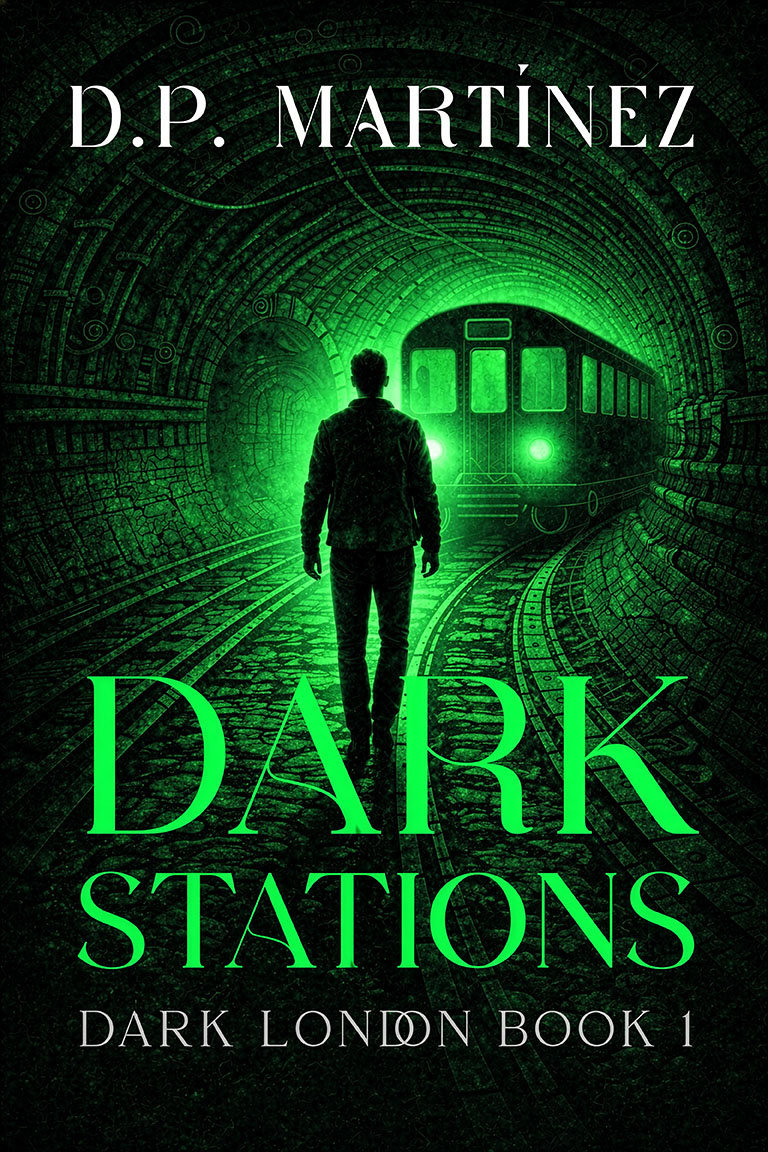
Dark Stations by D.P. Martinez
What it’s about:
Ghosts ride the London Underground, boarding at stations that don’t exist. One day, a man steps off with them to search for his dead daughter.
Why it's a London must-read:
It turns the city’s most iconic system—the Underground—into a living metaphor for grief, memory, and survival. It’s not just set in London; it understands London.
11. Science-Fantasy
Not quite science fiction, not quite fantasy. Uses advanced tech, cosmic myth, or post-human elements without caring about strict scientific realism.
The Book of the New Sun — Gene Wolfe
A torturer’s apprentice wanders a dying far-future Earth where forgotten tech looks like magic.
Why it’s top-tier: Wolfe writes like a puzzle-box; critics and genre authors adore it. Readers debate its meaning decades later.
Dune — Frank Herbert
Feuding houses, ecology, religion, economics, and prophecy on a desert planet.
Why it’s top-tier: Herbert mixes myth with political theory and environmental science. The result is closer to science-fantasy than hard sci-fi.
The Quantum Thief — Hannu Rajaniemi
A thief regains his memories in a post-human solar system full of weird tech and social systems.
Why it’s top-tier: Rajaniemi writes like a theoretical physicist who read too much folklore. Dense, tricky, rewarding.
12. Steampunk / Gaslamp Fantasy
Industrial or Victorian-inflected settings with magic or speculative tech. Often concerned with class, colonial imaginaries, and societal change—though not always consciously.
The Difference Engine — William Gibson & Bruce Sterling
What if Charles Babbage’s computer launched an early information age?
Why it’s top-tier: It helped spark steampunk’s aesthetic and literary identity, even if later works became more whimsical.
The Parasol Protectorate — Gail Carriger
Supernaturals + manners + tea + Victorian London.
Why it’s top-tier: Carriger brought humour and romance into steampunk, widening its audience beyond niche circles.
Leviathan — Scott Westerfeld
WWI-era Europe with biotech beasts vs mechanical war machines.
Why it’s top-tier: Westerfeld questioned industrial nostalgia and reframed steampunk through biopunk instead of gears and goggles.
13. Dark / Gothic Fantasy
Fantasy with horror DNA—ghosts, monstrosity, decay, psychological dread, or existential questions.
The Dark Tower — Stephen King
A gunslinger pursues a tower across a post-apocalyptic multiverse.
Why it’s top-tier: King fuses Westerns, cosmic horror, and metaphysics. The hybrid form is what makes it influential.
Coraline — Neil Gaiman
A girl enters a mirror-world with an “other mother” who wants to claim her.
Why it’s top-tier: Gaiman takes childlike wonder and turns it uncanny without condescension.
The Library at Mount Char — Scott Hawkins
Orphans raised by a godlike figure fight over reality itself.
Why it’s top-tier: Cult favourite. Brutal, surreal, bizarre, and almost impossible to categorise.
14. Humorous / Satirical Fantasy
Fantasy that uses humour to poke at society, genre tropes, or human behaviour.
Discworld — Terry Pratchett
A flat world on the back of a turtle hosts witches, wizards, cops, and con artists.
Why it’s top-tier: No one balanced humour with empathy like Pratchett. Also a masterclass in genre theory disguised as comedy.
Good Omens — Terry Pratchett & Neil Gaiman
An angel and demon try to stop the apocalypse.
Why it’s top-tier: Satirical but warm; rarely cynical. Cult classic for a reason.
Kings of the Wyld — Nicholas Eames
Retired mercenaries reunite for one more tour.
Why it’s top-tier: Dad-rock sword & sorcery. Readers liked the mix of comedy, heart, and adventure.
Where Fantasy is Headed
A few emerging subgenres worth watching:
- Cozy Fantasy (small stakes, kindness, community — e.g., Legends & Lattes)
- Solarpunk Fantasy (climate optimism + myth)
- Afrofantasy and Indigenous Futurisms (expanding fast in both YA and adult markets)
- Folklore Fantasy (regional mythology returning with force)
This shift challenges the old assumption that fantasy must be epic, violent, or medieval. Publishing data shows rising interest in comfort, culture, and climate rather than endless war sagas.
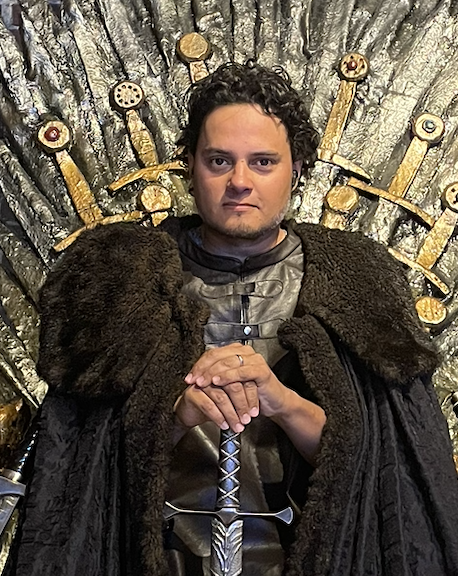
D.P. Martinez is a contemporary fantasy author specialising in urban fantasy and magical realism. He holds an M.A. in English Literature from the University of Greenwich, where he focused on Literary London. His research explored metaphorical representations of London in urban fantasy. He has written hundreds of articles and several books across both fiction and non-fiction.