

If you’ve ever wondered what happens when a role-playing game meets modern narrative fiction, you’re staring at LitRPG, an increasingly visible hybrid that’s shifting expectations about how stories can use systems to tell stories.
Whether you’re a gamer curious about narrative fiction, a reader exploring new trends in speculative literature, or a writer trying to understand genre boundaries, LitRPG is worth attention because it’s not just another fantasy subgenre, but a formal attempt to structure storytelling through mechanics.
What LitRPG Really Means
LitRPG stands for “literary role-playing game.” At a basic level, it’s fiction that embraces the mechanics of role-playing games — levels, stats, skills, quests — and makes those mechanics a core part of the reading experience. It’s not just that the world resembles a video game; the story actively incorporates systems.
Practically speaking, two things separate LitRPG from most other fantasy or sci-fi:
- Game-like mechanics are visible and significant: Characters gain experience, have measurable attributes, see status updates, or receive in-story prompts like you might see in an RPG interface.
- These mechanics shape the narrative arc: Growth, conflict, and resolution aren’t just emotional or thematic—they’re quantifiable. Levelling up isn’t metaphorical; it directly affects how a character deals with challenges.
This structural commitment to rules and mechanics is the reason a stat table can feel like a plot device, and why readers used to open-world games often find LitRPG intuitively satisfying.
Where LitRPG Came From
LitRPG didn’t spring from nowhere. Its roots are tangled with the rise of digital RPGs and online storytelling. The term itself was coined in the early 2010s, largely through Russian publishing circles, and the genre was popularised in large part by self-published authors on platforms like RoyalRoad and Kindle Unlimited.
But there are precedents if we look deeper — stories from decades earlier that anticipated game structures in narrative:
- Epic (2004) by Conor Kostick portrays a society structured around a massive virtual game where in-game growth affects real-life status.
- Ready Player One (2011) by Ernest Cline leveraged pop culture and virtual reality quests to deliver a mass-market gamified story, even if it’s sometimes treated as GameLit rather than strict LitRPG.
Still, it was the explosion of MMORPGs—think World of Warcraft and EverQuest—combined with affordable self-publishing that set LitRPG on its modern trajectory.
LitRPG vs Related Genres
Genre labels matter, especially if you’re trying to find a book that actually reads like a game.
LitRPG vs GameLit
The distinction might sound subtle, but genre enthusiasts take it seriously:
- LitRPG: Game mechanics are explicit and integral to the plot. Characters don’t just exist in a game; they interpret and respond to game rules that are visible to the reader.
- GameLit: A broader category where a story features a game world, but might not spell out systems in the way LitRPG does. Ready Player One, for example, is often placed in GameLit because it references game culture rather than embedding levelling mechanics as narrative drivers.
You could think of GameLit as gamified fiction and LitRPG as structurally immersive fiction.
LitRPG vs Traditional Fantasy and Progression Fantasy
The overlap with fantasy is huge. Many LitRPGs are fantasy worlds. But:
- Traditional fantasy relies on worldbuilding, lore, and character arcs that aren’t quantified. Magic and power are narrative rather than measured.
- Progression fantasy, a related subgenre, tracks character growth but doesn’t necessarily present mechanics like XP bars or skill trees in the text itself.
LitRPG turns progression into something you see. You don’t just feel a character growing stronger; you watch the numbers rise.
Why LitRPG Appeals to Readers
It may not be your cup of tea, but plenty of people have found traction in the genre for reasons beyond pure escapism.
- Tangible growth: When a character’s stats go up, it feels like an achievement — similar to how players react in games.
- Structured pacing: Quests and unlocks create natural narrative beats.
- Strategic tension: Victory isn’t only about narrative closure; it often hinges on whether the protagonist has optimised skills or equipment.
- Accessibility: Readers who grew up gaming recognise these structures instinctively, reducing the worldbuilding load.
There’s also a communal element: many LitRPG series were first published serially online, encouraging ongoing reader engagement.
The Best LitRPG Books to Start With
Here’s a curated list that mixes genre classics, reader favorites, and critically discussed titles. If you’re exploring LitRPG for the first time, these make excellent entry points.
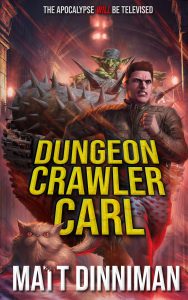
Dungeon Crawler Carl — Matt Dinniman
A breakout example of modern LitRPG. Earth is transformed into a massive dungeon, and Carl — along with his sentient feline companion — must progress through floors filled with monsters and loot. Blends absurd humor with deeply realised game mechanics.
Why read it: It’s a genre benchmark with strong character voice and clear rules.
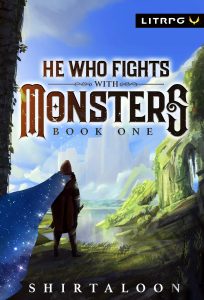
He Who Fights With Monsters — Shirtaloon
Follows an ordinary guy transported to a game world. His progression and strategic growth are central, but so are philosophical questions about morality and choice.
Why read it: Popular for both its growth mechanics and its character depth.
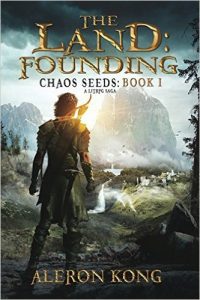
The Land: Founding — Aleron Kong
One of the most well-known and best-voted LitRPG series. Features expansive worldbuilding and village building alongside levelling and stats.
Why read it: Classic dungeon and world progression with community and crafting elements.
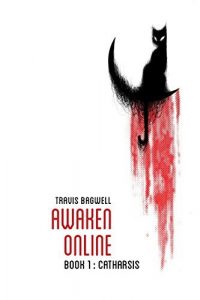
Awaken Online: Catharsis — Travis Bagwell
A darker take where the protagonist’s path isn’t straightforwardly heroic. The game world mirrors ethical complexity and player choice consequences.
Why read it: Great if you like morally ambiguous protagonists.
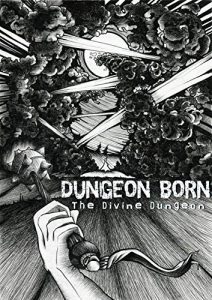
Dungeon Born — Dakota Krout
Quite different: the protagonist is the dungeon. This inversion gives a fresh mechanical perspective on growth, resource management, and ecosystem play.
Why read it: Innovative mechanics meet engaging strategic worldbuilding.
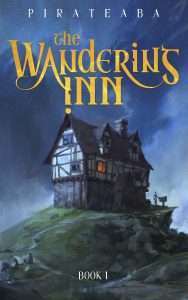
The Wandering Inn — Pirateaba
Blurs LitRPG and epic fantasy. Characters grow with stats, but the series’ strength is in its sprawling cast and long-form narrative arcs.
Why read it: Vast scope with emotional storytelling layered over RPG mechanics.
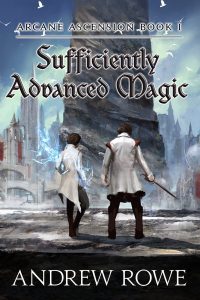
Sufficiently Advanced Magic — Andrew Rowe
Not a traditional LitRPG title by strict definitions, but it feels LitRPG because of its systematic approach to progression through a tower filled with challenges.
Why read it: Great for readers who enjoy puzzle-like progression.
Where LitRPG Is Headed
The genre has clearly moved from niche web serials to mainstream publishing deals and even television adaptations, signalling broader cultural traction. LitRPG’s influence can already be seen in fantasy and sci-fi that borrow structural clarity from games without fully embracing the mechanics.
Expect future narratives to push boundaries between interactive fiction and traditional storytelling, perhaps leading to hybrid formats that empower readers not just conceptually but practically—for example, integrating app-based progression trackers or layered AR experiences tied to text.
Why Watch (or Read) This Space
LitRPG will always be controversial among literary traditionalists — its reliance on quantification can feel like “math in fiction.” But that’s also what makes it compelling to a growing readership.
It questions a core assumption of storytelling: do narratives need to be about emotional arcs alone, or can they also be about systems that people understand intuitively because they’ve lived them in games?
Reading LitRPG means engaging with a story as a system, not just as a plot. For some, that’s the next step in immersive fiction.
D.P. Martinez is a contemporary fantasy author specialising in urban fantasy and magical realism. He holds an M.A. in English Literature from the University of Greenwich, where he focused on Literary London. His research explored metaphorical representations of London in urban fantasy. He has written hundreds of articles and several books across both fiction and non-fiction.