
When readers ask for the “best fantasy series”, the answers usually collapse into sales, hype, or world-building scale. A very different question is harder and more interesting:
Which fantasy series are genuinely admired for how they are written?
- Sentence-level craft
- Narrative voice
- Psychological depth
- Control of language
Below is a prose-first list and a practical section on what good prose actually is and why it matters,.
What do we even mean by “good prose” in fantasy?
Before jumping into titles, it’s worth being a little sceptical about the term itself. People often praise “beautiful writing” when what they really enjoy is:
- fast pacing,
- vivid imagery,
- or emotional scenes.
Those can exist with very ordinary prose.
In literary terms, strong prose usually involves:
1. A controlled narrative voice
The voice is stable, intentional, and aligned with the character’s psychology and social position. It does not drift depending on the needs of the plot.
2. Rhythm and sentence architecture
Good prose has cadence. Short sentences are placed deliberately. Long sentences carry syntactic logic and emotional movement — not just decoration.
3. Meaning embedded in language, not added on top
Metaphor, moral tension, and thematic pressure are built into how things are described — not bolted on through commentary.
4. Narrative distance that actually does something
Who sees? Who interprets? Who misunderstands? Good prose controls proximity to consciousness. This is where fantasy quietly becomes close to literary fiction.
Ursula Le Guin writes directly about this in Steering the Craft (1998), arguing that point of view and sentence rhythm are ethical and philosophical tools, not just stylistic ones.
Gene Wolfe’s critics (notably Michael Andre-Driussi and Peter Wright) repeatedly focus on how uncertainty and omission operate at the level of wording rather than plot.
That matters for fantasy in particular because fantasy worlds are not real. Language is the only mechanism that makes them feel true. When prose is weak, the illusion collapses very quickly.
1. The Realm of the Elderlings – Robin Hobb
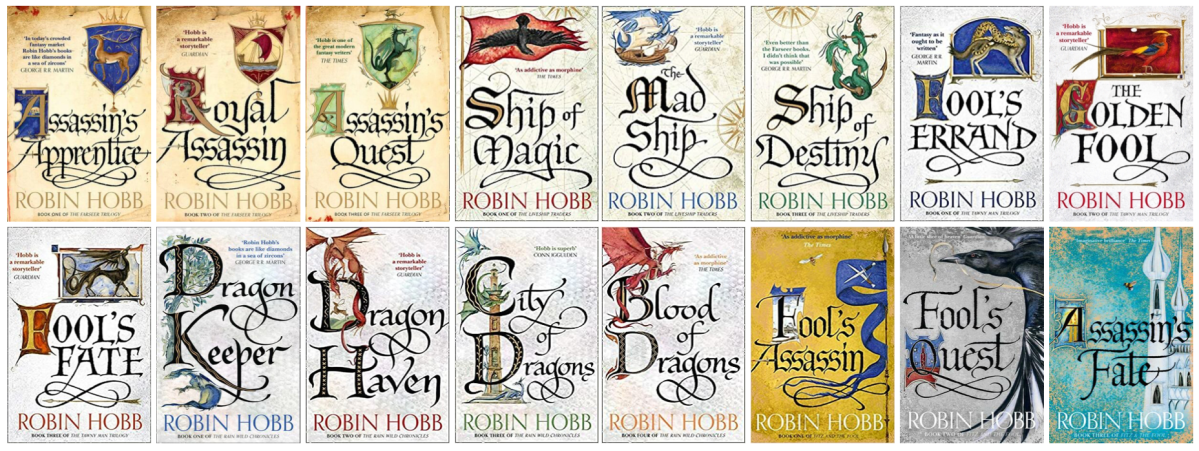
Among modern fantasy readers and critics, this is probably the most consistently praised series for prose and emotional realism.
Hobb’s writing stands out because:
- interiority drives the narrative;
- emotional states alter how events are perceived;
- voice develops across decades of the character’s life.
This is not decorative writing. The language carries guilt, loyalty, shame and love as ongoing psychological pressures.
A common criticism is that the books feel slow. That criticism tends to confuse action density with narrative depth.
2. Earthsea Cycle – Ursula K. Le Guin
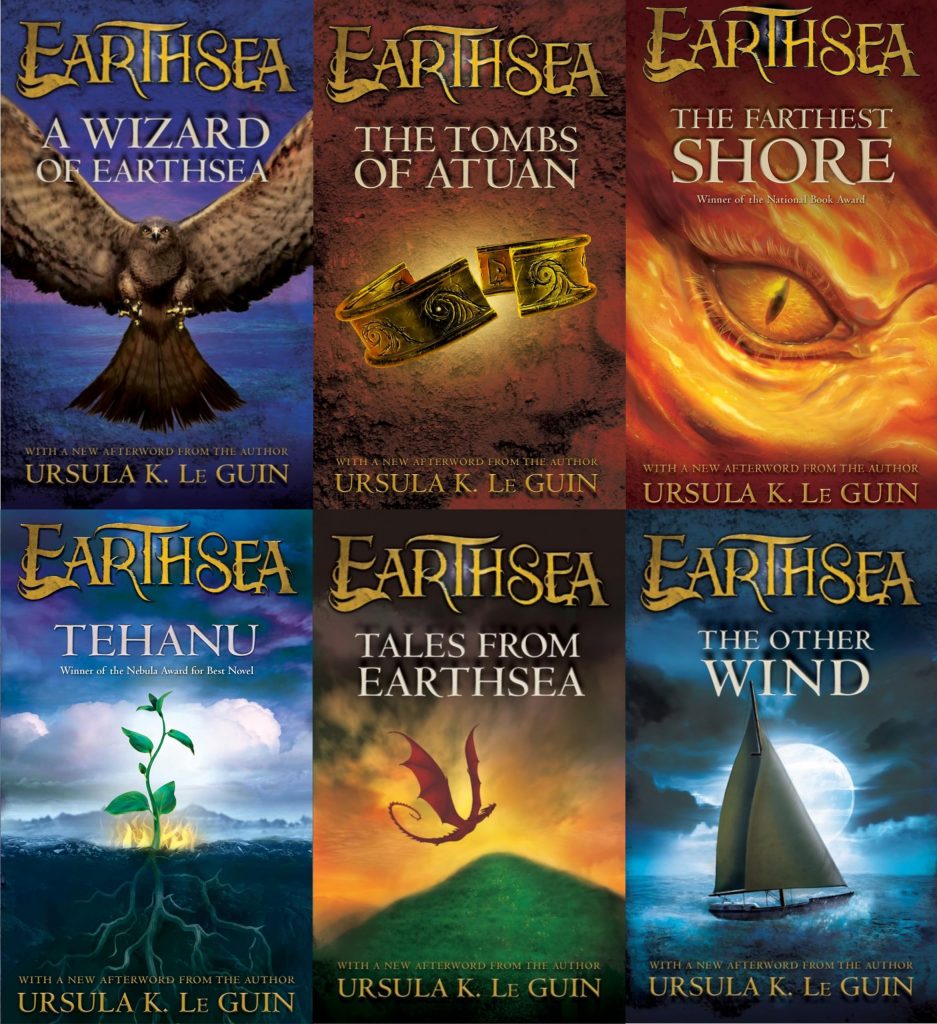
Le Guin’s prose is deceptively simple. Her sentences avoid ornament. The power sits in:
- narrative distance,
- restrained vocabulary,
- and almost mythic pacing.
The Earthsea books often read closer to parables than to epic fantasy. That is deliberate. Language carries ethical reflection without explicit commentary.
In a market increasingly shaped by cinematic fantasy, Le Guin’s influence is quietly returning through smaller presses and crossover literary fantasy.
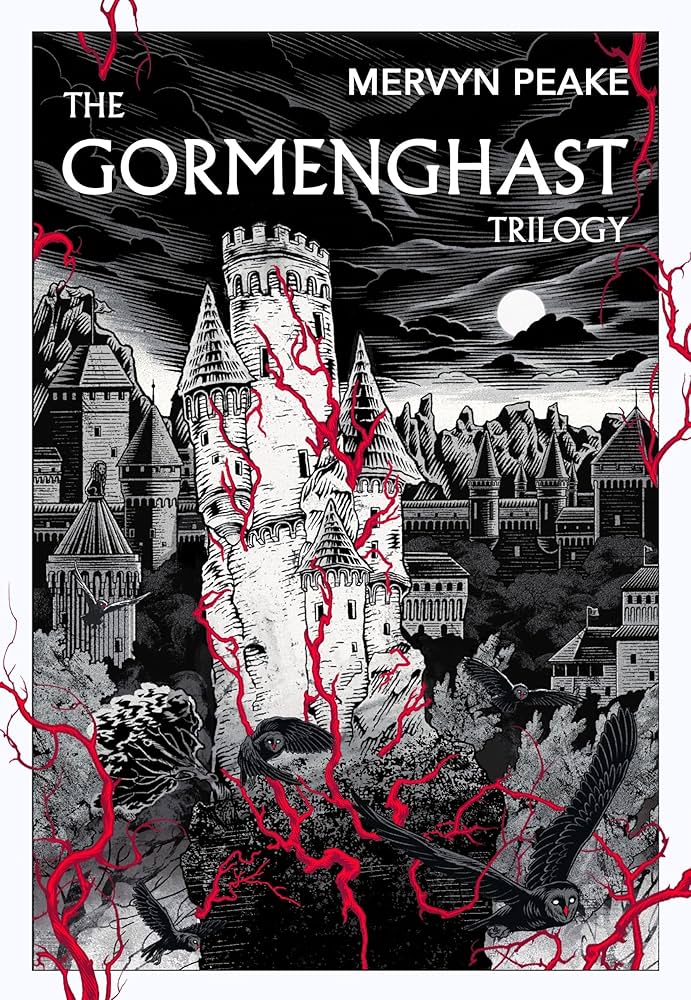
3. The Gormenghast Trilogy – Mervyn Peake
If you want to see what happens when prose becomes almost architectural, this is the reference point.
Peake’s writing is:
- highly descriptive,
- grotesque,
- rhythmically elaborate,
- and painterly.
Characters are shaped through language as much as through action. The castle itself feels linguistically constructed—a living structure built out of adjectives and syntax.
This is not an easy read. It is not meant to be.
4. The Book of the New Sun – Gene Wolfe
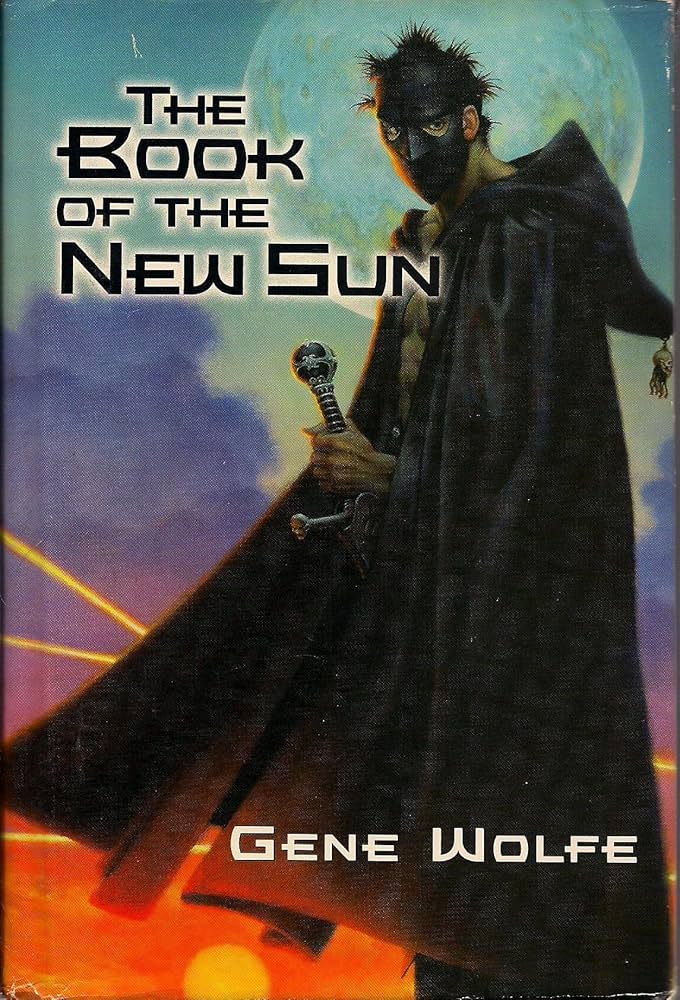
Wolfe’s series is frequently described as complex. That label misses the real achievement. The prose constructs uncertainty.
Meaning is hidden inside:
- selective memory,
- evasive phrasing,
- and unstable narrative authority.
This aligns closely with current literary discussions about truth-effects, narrative reliability and interpretive power.
Few fantasy series demand such sustained attention to language itself.
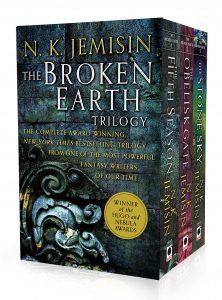
5. The Broken Earth Trilogy – N. K. Jemisin
Jemisin’s trilogy is often discussed for its political themes. Its technical narrative craft is just as important.
The use of second person is not a stylistic gimmick. It performs:
- dissociation,
- traumatic distance,
- and identity fragmentation.
Voice and structure are inseparable from the story’s emotional mechanics.
This is one of the clearest recent demonstrations that fantasy prose can be formally ambitious without losing mainstream readership.
6. The Kingkiller Chronicle – Patrick Rothfuss
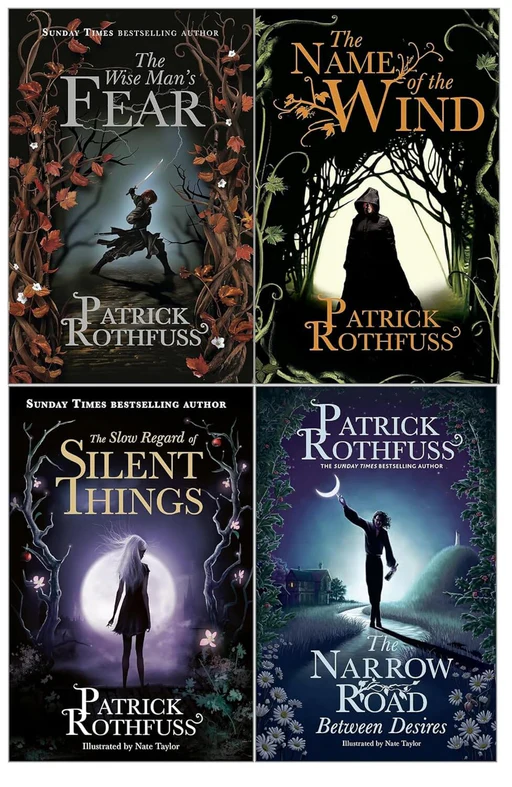
Rothfuss earns his place here on musicality alone.
His writing features:
- carefully controlled cadence,
- strong oral-storytelling rhythm,
- and emotionally tuned phrasing.
There is legitimate debate around narrative depth and unresolved arcs.
Still, at the level of sentence craft and scene construction, his prose remains one of the most widely admired in contemporary commercial fantasy.
Why Good Prose Matters in Fantasy
Fantasy already asks readers to accept:
- invented histories,
- invented physics,
- invented cultures,
- and invented geographies.
Prose becomes the credibility engine.
Good writing does three things that world-building alone cannot:
1. It shapes emotional truth
Readers do not believe characters because of backstory.
They believe them because language reproduces cognitive and emotional processes.
2. It governs metaphor without flattening it
Fantasy is saturated with metaphor — cities as bodies, magic as power, monsters as social fear.
Without linguistic control, those metaphors become blunt symbols.
Given your sustained work on vehicle–tenor relationships and spatial metaphor in London-based fantasy, this distinction is critical. Prose determines whether metaphor remains open and interpretive — or collapses into message.
3. It supports long-form narrative credibility
In multi-book series, voice consistency becomes structural.
Hobb and Wolfe are particularly strong examples of how prose stabilises long narrative arcs.
If fantasy continues drifting toward hybrid literary–genre publishing — which current indie and crossover markets suggest it will — these kinds of prose-driven series will matter more, not less.

D.P. Martinez is a contemporary fantasy author specialising in urban fantasy and magical realism. He holds an M.A. in English Literature from the University of Greenwich, where he focused on Literary London. His research explored metaphorical representations of London in urban fantasy. He has written hundreds of articles and several books across both fiction and non-fiction.