
Urban fantasy still gets collapsed into one narrow idea: supernatural romance in a modern city.
That shortcut hides what actually makes the longest-running, non-romance urban fantasy series survive. They do not last because readers want more relationship drama.
They last because they build institutions, power systems, legal orders and hidden infrastructures inside real cities… and then keep expanding those systems across novels, novellas, short fiction and graphic narratives.
Six (Long) Urban Fantasy Worlds
I am counting material that meaningfully extends canon, not promotional extras.
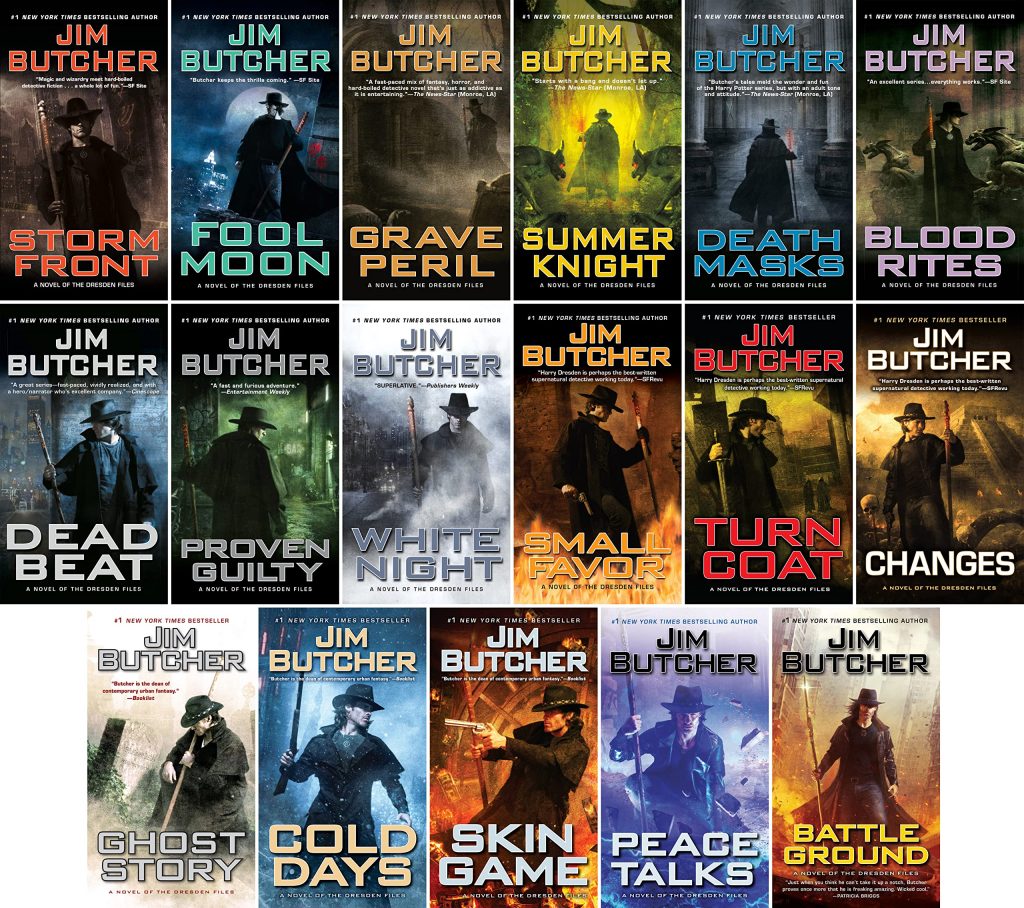
The Dresden Files by Jim Butcher (56 works)
At its simplest level, this series follows Harry Dresden, a professional wizard working as a private investigator in modern Chicago. He is hired to deal with cases the police cannot touch: magical murders, supernatural crime scenes, disappearances that sit outside any legal framework.
What begins as episodic detective fiction quietly evolves into something much more ambitious. The long arc is not about catching increasingly dangerous monsters. It is about how supernatural authority is organised, regulated and enforced.
Across the series, readers are introduced to:
- supernatural courts and political blocs
- treaty systems governing interspecies conflict
- internal enforcement bodies and judicial processes
Romantic relationships exist, but they never become the narrative engine. The real story is about responsibility, jurisdiction and what happens when a marginal operator becomes entangled with large governing structures.
This institutional focus is deepened through a substantial body of canonical short fiction. The collections Side Jobs and Brief Cases contain dozens of stories set between major novels. Many of these focus on secondary characters and enforcement operations rather than Harry himself.
In addition, the graphic-novel line published by Dynamite adapts key episodes and introduces side stories that explore the operational consequences of supernatural politics. The franchise ends up behaving less like a detective series and more like a sprawling civic narrative about magical governance.
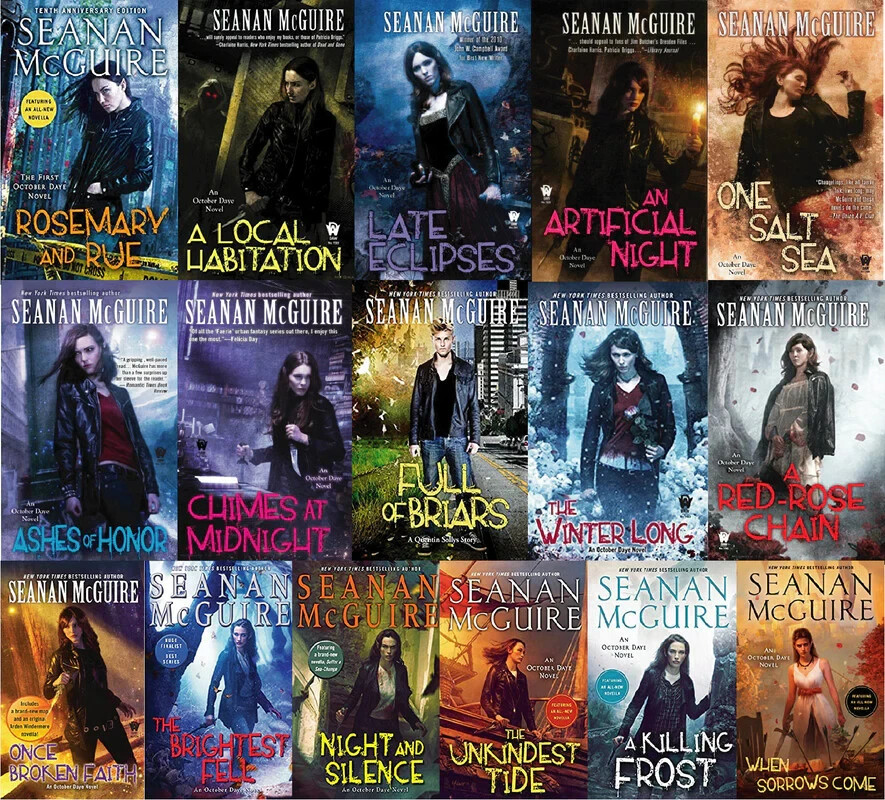
October Daye by Seanan McGuire (33 works)
The protagonist, October “Toby” Daye, is a private investigator operating in modern San Francisco — but her real environment is not human society. It is a deeply stratified fae world hidden inside the city.
The series revolves around:
- territorial sovereignty among fae courts
- hereditary legitimacy and lineage-based authority
- political obligation, debt and inherited responsibility
Each book usually begins with a concrete investigation—a disappearance, a suspicious death, a breach of territory—but the true narrative momentum comes from how those cases destabilise court alliances and expose structural inequalities inside the fae hierarchy.
Although the series contains strong emotional relationships, it is not organised around romantic resolution. The organising logic is political.
The wider narrative ecosystem includes multiple canonical short stories and novellas. These often explore historical betrayals, peripheral court figures and long-running feuds that are only briefly referenced in the main novels.
Rather than functioning as side adventures, these shorter works operate as political memory. They document why certain alliances are fragile and why certain actors carry reputational power. This externalisation of institutional history is one of the main reasons the series sustains coherent long-term worldbuilding.
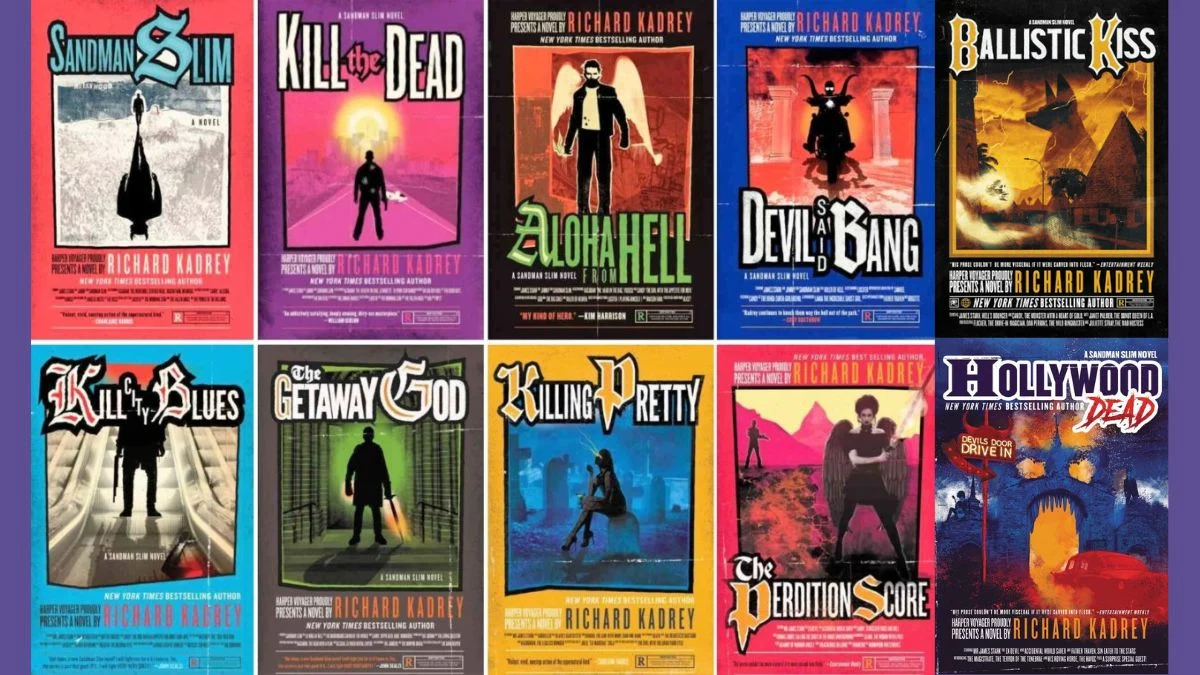
Sandman Slim by Richard Kadrey (14 works)
Sandman Slim centres on James Stark, a magician who escapes from Hell and returns to modern Los Angeles. He wants revenge on the people who betrayed him.
On the surface, the books are violent, fast and deeply rooted in noir and splatterpunk aesthetics. Underneath, however, the series is a study in institutional cruelty.
Hell is not a mythic abstraction. It is a functioning bureaucracy. Angels and demons behave like administrative agents. Violence is distributed through formal structures of power.
The narrative repeatedly returns to:
- supernatural labour systems
- hierarchical command structures
- and the way organisations normalise brutality
Romance plays almost no structural role. The emotional centre of the story is survival after institutional abuse.
Kadrey’s short fiction set in the same universe reinforces this framework by shifting attention away from Stark and towards damaged workers, supernatural contractors and peripheral operatives who exist inside Hell’s political economy. These stories extend the series’ central argument: that power is embedded in organisational design rather than individual villainy.
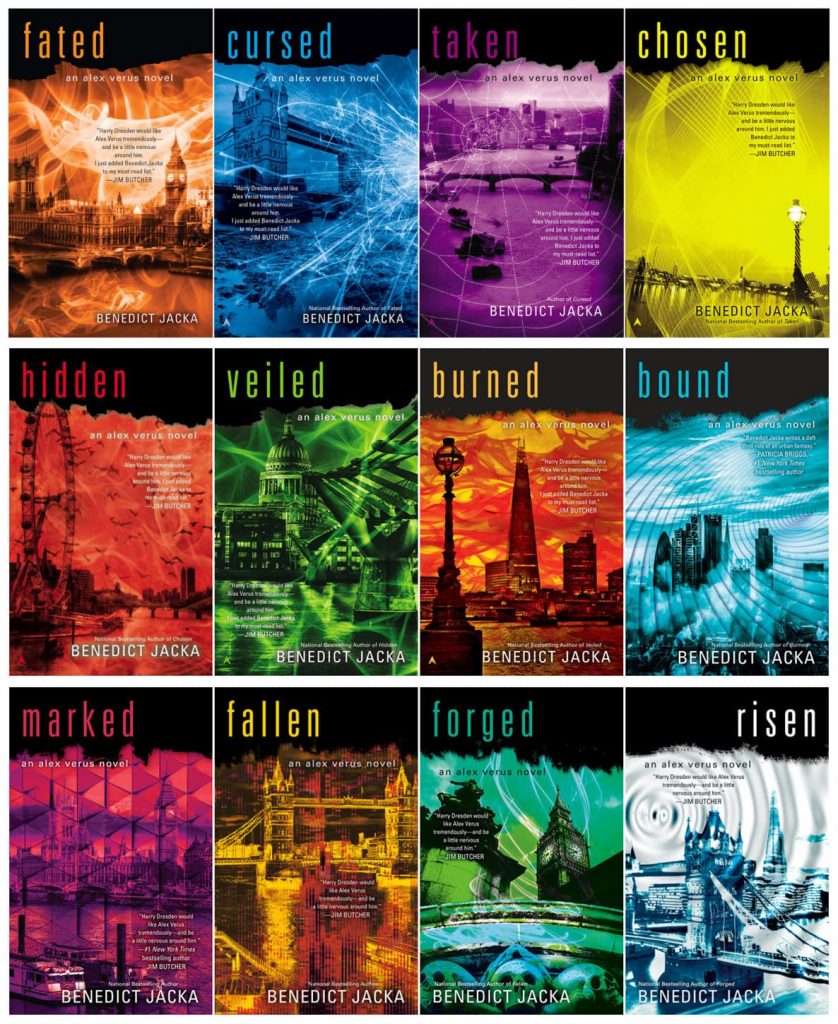
Alex Verus by Benedict Jacka (15 works)
This London-based series follows Alex Verus, a diviner who can see possible futures but lacks the offensive power valued by his society. He survives on the margins of a magical world divided between authoritarian political factions.
The central conflict is not between heroes and monsters. It is between individuals and coercive institutions.
The mage world operates through:
- surveillance and intelligence gathering
- ideological loyalty tests
- and enforcement bodies that punish neutrality
Each novel places Alex inside an escalating political crisis, forcing him to negotiate with competing power blocs while attempting to protect vulnerable non-aligned figures.
The wider narrative ecosystem includes multiple novellas and short stories placed between major turning points. These works explore:
- enforcement culture inside magical authorities
- everyday political intimidation
- and the informal economies that allow marginal actors to survive
Together, the novels and shorter works construct a remarkably consistent fictional model of authoritarian governance hidden inside contemporary London.
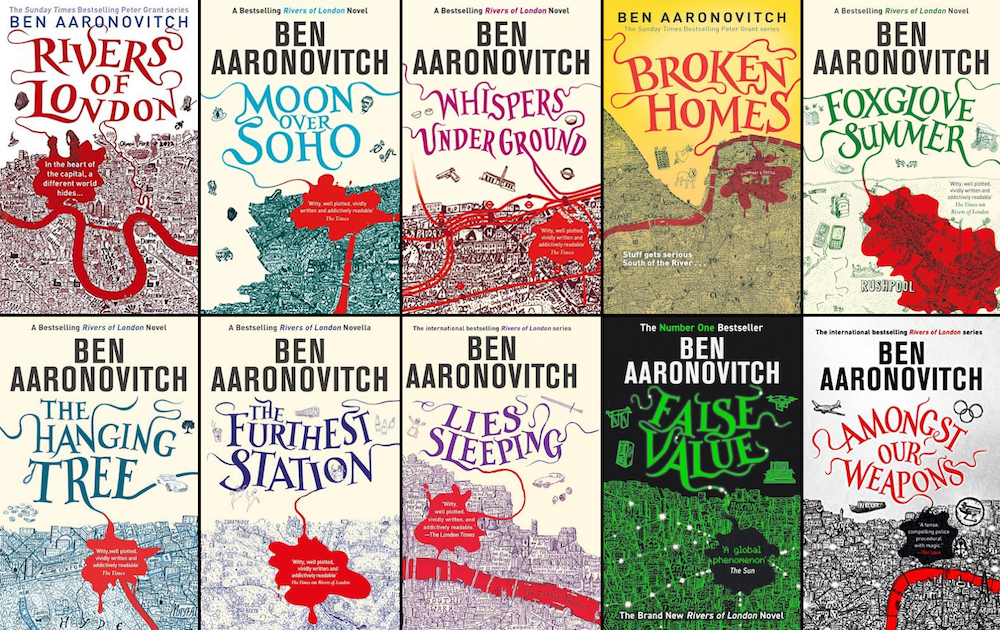
Rivers of London by Ben Aaranovitch (44 works)
This series follows Peter Grant, a newly qualified police officer who is recruited into a tiny specialist unit dealing with magical crime.
Unlike most urban fantasy, the focus is not on secret heroism but on institutional adaptation. The central question is how a modern police force responds when confronted with phenomena that cannot be categorised, regulated or easily legitimised.
The books revolve around:
- bureaucratic blindness
- professional boundaries
- and the uneasy incorporation of magical actors into modern law
London itself becomes an institutional landscape shaped by imperial memory, class division and spatial inequality. The famous personified rivers function as cultural and territorial authorities embedded in the city’s history.
The franchise is strongly multi-format. Alongside the main novels, a substantial sequence of graphic novels published by Titan Comics follows different officers, boroughs and magical communities. Many of these stories are original expansions rather than adaptations.
Novellas and short fiction further develop training structures, jurisdictional disputes and the internal culture of the Folly. Together, these formats turn the series into one of the most sustained fictional studies of legitimacy and governance in a contemporary city.
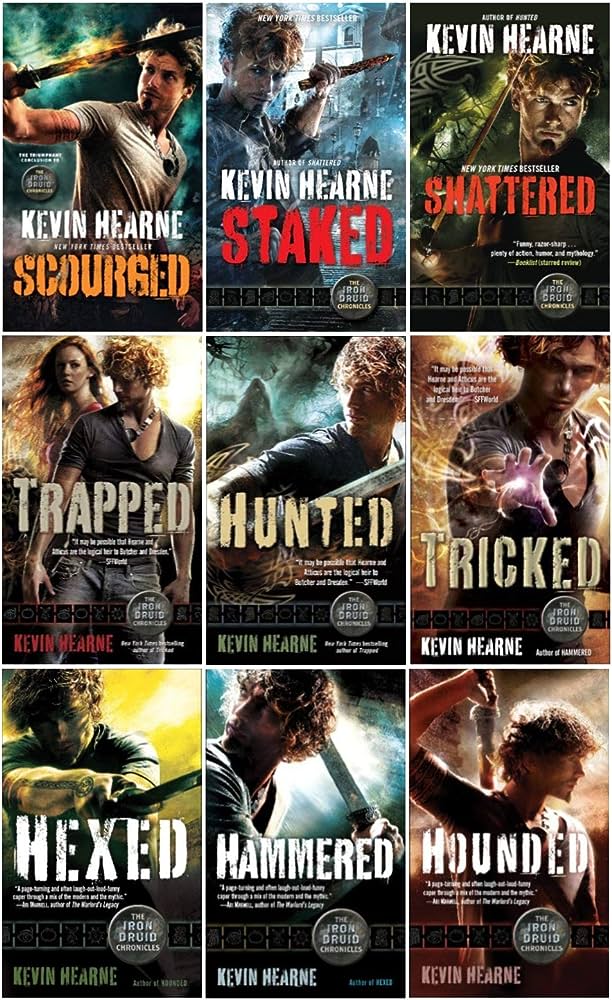
The Iron Druid Chronicles by Kevin Hearne (31 works)
The core protagonist, Atticus O’Sullivan, is a two-thousand-year-old druid living quietly in modern America. His apparent isolation collapses when multiple pantheons begin to treat him as a strategic liability.
The narrative centres on:
- inter-pantheon treaties
- mythic jurisdictional conflict
- and the consequences of breaking ancient political agreements
Although lighter in tone than some of the other series on this list, the story engine is not romance. It is diplomatic and military escalation across competing divine systems.
The wider franchise includes multiple novella sequences and short-story collections that follow secondary characters and parallel agents working under different gods and mythological traditions. These stories expand the setting into a decentralised political network rather than a single heroic storyline.
What emerges is a distributed system of mythic governance operating through modern social and geographical infrastructure.
What changes when the full ecosystem is included?
Once novels, novellas, short fiction and graphic narratives are considered together, a clear pattern emerges.
These long-running, non-romance urban fantasy series persist because they are structurally extensible.
Across all six franchises:
- short fiction documents institutional margins
- novellas test political consequences without destabilising the main arc
- graphic narratives expand spatial and organisational reach
The protagonists remain important. But the enduring narrative object is not the hero.
It is the system.
Urban fantasy, when stripped of paranormal romance, increasingly resembles serial civic fiction— stories about hidden governance, contested legitimacy and the invisible infrastructures that shape modern cities.
That shift explains why these particular series continue to feel relevant, readable and expandable— and why the future of urban fantasy looks far closer to administrative myth than to supernatural dating drama.
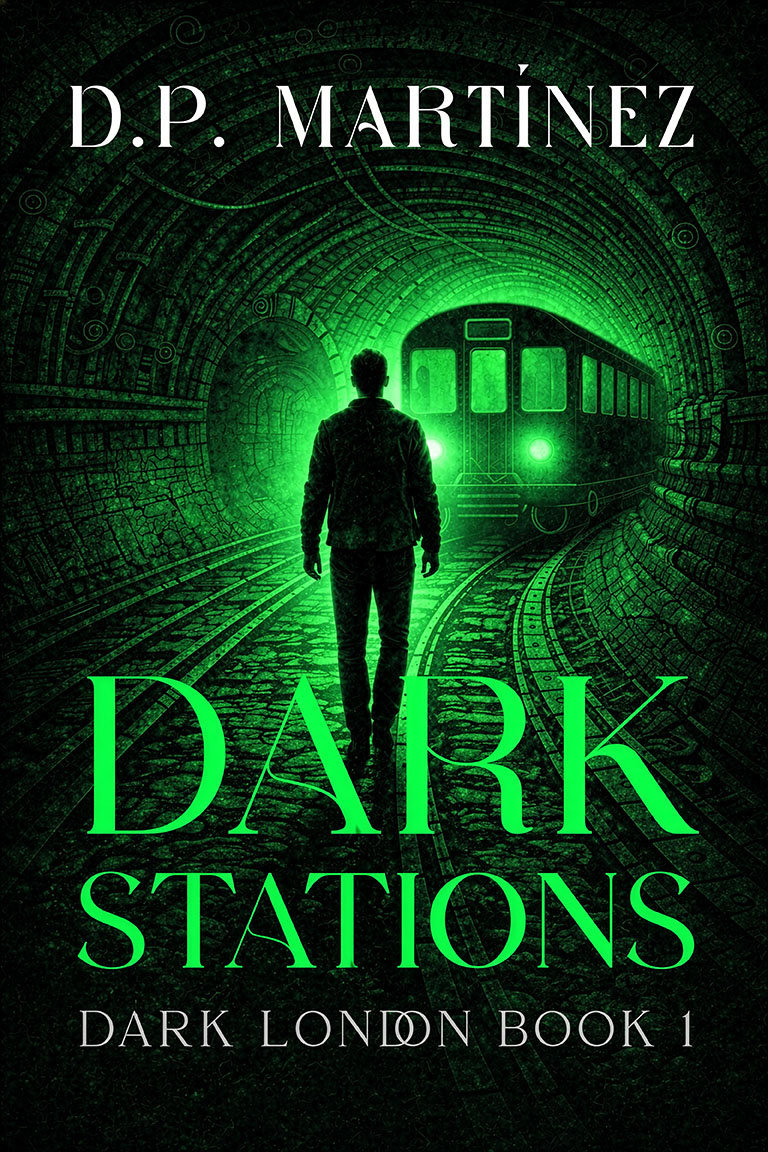
Dark Stations: An Urban Fantasy Novel
Ghosts ride the London Underground, boarding at stations that don’t exist. One day, a man steps off with them to search for his dead daughter.

D.P. Martinez is a contemporary fantasy author specialising in urban fantasy and magical realism. He holds an M.A. in English Literature from the University of Greenwich, where he focused on Literary London. His research explored metaphorical representations of London in urban fantasy. He has written hundreds of articles and several books across both fiction and non-fiction.